Car Won't Start, Just Clicks? What a Single Click vs Rapid Clicking Means
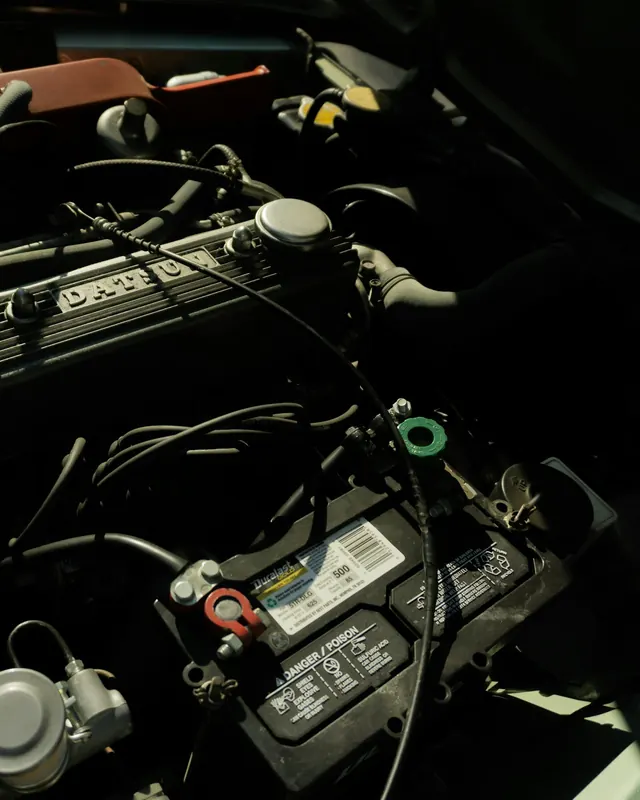
Photo: William Liu on Unsplash
On this page
The short answer
Rapid clicking when you turn the key usually means the battery is too weak to turn the engine, or a battery cable is loose or corroded. A single click with bright dash lights more often points to the starter. Check the battery terminals first, jump-start only if the battery case is intact, and have the battery and starting system tested before replacing parts.
You turn the key or press the button, the dash lights come on, and instead of the engine you get a click. Maybe one click, maybe a fast rattle of them, maybe nothing at all. The sound is a useful clue. Here's what each one usually means, what you can safely check in the driveway, and how to jump-start the car without making things worse.
Why does my car click but not start?
A car clicks without starting when the starter's switch, called the solenoid, tries to engage but there isn't enough power at the starter to turn the engine. The AA describes the click as the solenoid trying to engage the starter motor without enough power to turn the engine over.
The most common causes, most likely first:
- A weak or discharged battery. Enough charge to run the dash lights, not enough to crank the engine.
- Loose or corroded battery cables. AAA says even a thin layer of whitish-blue corrosion on a terminal can stop electricity from flowing.
- A worn starter motor or solenoid. The AA lists worn starter parts and a faulty solenoid among the causes.
- Bad wiring or a ground connection between the battery, the engine and the starter.
Before anything else, make sure an automatic is fully in Park (or try Neutral). On many cars the engine won't crank in Drive, and that can feel like a dead starter.
What does each sound mean?
The kind of click narrows it down. AAA says rapid clicking when the key is turned generally indicates a battery issue, while a single click, especially with bright dashboard lights, often means a bad starter motor rather than the battery.
| What you hear and see | What it usually points to |
|---|---|
| Rapid clicking, dash lights dim or flicker | Weak battery, or a loose or corroded cable |
| One click, dash lights stay bright | Starter motor or solenoid |
| Slow, labored crank that may or may not catch | Battery losing its charge |
| No sound and no dash lights | Fully dead battery or a disconnected cable |
| No sound, dash lights bright | Starter, its relay or wiring, or the ignition switch |
| Normal cranking, engine won't fire | Usually not the battery (fuel, spark or sensors) |
That last row matters. If the engine spins at its normal speed and just doesn't run, a new battery won't fix it. Our post on signs your car battery is dying covers the slow-crank side of this in more detail.
Why does it happen more on cold mornings?
A battery that clicks on a cold morning was usually weak already. AAA notes that excessively low temperatures can keep a car from starting right away, and AAA Club Alliance says cold reduces battery capacity. Cold oil also makes the engine harder to turn, so the starter needs more power at the moment the battery has less to give.
Here in Lake Elsinore and Menifee, the damage tends to happen over the summer. Months of heat under the hood wear a battery down, and the first chilly week of the season is when it finally shows up as a click instead of a start.
What can I check myself?
A few checks are safe with the engine off and the key out:
- Look at the battery terminals. White, green or blue crust is corrosion. Don't scrape it with the battery in place; AAA's advice is to remove the battery and clean it with a battery cleaner or baking soda and water and a wire brush. AAA also says corrosion is a sign the battery is leaking and will need replacing before long.
- Wiggle both cables at the battery. They should not move on the posts. A loose clamp can cause clicking on its own.
- Check the battery case. Cracks, a bulging case or a rotten egg smell mean stop here. AAA says a damaged battery should be replaced, not jumped.
- Read the voltage if you have a multimeter. AAA says a healthy battery reads about 12.6 volts with the engine off; lower than that means it's undercharged or on its way out.
A voltage reading shows the charge, not whether the battery can still deliver power under load. That takes a proper battery test.
How do I jump-start a car that only clicks?
Connect positive to positive first, and put the last black clamp on bare metal away from the dead battery. Before you start, check your owner's manual: AAA Club Alliance says to consult it before attempting a jump, and many cars have dedicated jump points under the hood. AAA warns that most hybrids and EVs have electronics that can be destroyed by jump-starting another car, so don't use one as the donor unless its manual says you can. If the car that won't start is a hybrid or EV, follow its owner's manual instead of these steps.
With both cars off, the usual order from AAA's guides is:
- Red clamp to the dead battery's positive (+) post.
- Other red clamp to the good battery's positive (+) post.
- Black clamp to the good battery's negative (-) post.
- Last black clamp to clean, unpainted metal on the engine of the car that won't start, away from the battery. AAA Club Alliance says clamping the dead battery's negative post can cause sparks, which is a fire risk.
Start the working car and let it idle five to ten minutes, as AAA Club Alliance suggests, then try the other one. If the engine turns over slowly, AAA says to stop, let the working car charge it about five more minutes, then try again; a car that still won't start after a third try likely has a completely failed battery. Once it runs, remove the cables in reverse order.
Don't let the clamps touch each other, and don't lean over the battery while you connect them. If the car then starts right away, the battery side is the place to look. If it still gives you one click with good cables on, suspect the starter.
Is it the battery, the starter or the alternator?
If a jump fixes it, the battery was low, and the question is why. If the battery tests good and the car still clicks once, the starter is the likely cause. If a good battery keeps going flat, look at the alternator or a drain.
A battery that was fine until a light was left on just needs a charge and a test. A battery that keeps going flat points to age, a charging problem or something draining it with the car off. AAA says a reading of 13 to 14.5 volts with the engine running means the alternator is charging the battery correctly.
The starter is the suspect when the battery tests good and the car still clicks once, or starts some days and not others. The AA lists persistent clicking, grinding and intermittent starting among the signs of a starter on its way out, and says to stop trying and get help if you smell smoke or burning when you turn the key.
If you're not sure, our post on whether water can damage an alternator covers the charging side, and a battery check is on our winter car prep list.
When to bring it in
Bring it in if the car has clicked instead of starting more than once, needed a jump, or the battery is three or more years old and hasn't been tested. If it won't start at all, call us first so we can talk through the options.
Here's how we check it, in order:
- Look at the battery and cables: age, case, terminals, clamps and grounds.
- Test the battery to see whether it can still deliver power under load.
- Test the charging system: alternator output, its belt and connections.
- Check the starter circuit: the power reaching the starter, the solenoid and its wiring.
- Tell you what we found and what needs doing now versus what can wait.
You get a written estimate before we do any work, and repairs come with our 1-year/12,000-mile warranty. See our diagnostic page, or call (951) 445-8055.
Recent work like this at our shop
A few recent jobs from our service records. Vehicle, mileage and month only; no customer details.
| Vehicle | Work | Mileage | When |
|---|---|---|---|
| 2005 Nissan Frontier | Battery | 98,202 mi | Mar 2026 |
| 2016 Hyundai Sonata | Alternator | 212,891 mi | May 2025 |
| 2004 BMW 645Ci | Battery | 159,684 mi | May 2024 |
| 2005 Dodge Magnum | Alternator | 191,890 mi | Oct 2023 |
| 2017 Ford Edge | Battery | 62,437 mi | Aug 2023 |
Common questions
Why does my car click but not start?
The click is the starter's switch (the solenoid) trying to engage. If there isn't enough power reaching the starter to turn the engine, all you hear is clicking. A weak battery and loose or corroded connections are the most common reasons; a worn starter is the next suspect.
Is rapid clicking the battery or the starter?
Usually the battery. A weak battery has enough power to work the solenoid but not enough to spin the engine, so the solenoid clicks on and off over and over. A loose or corroded cable can do the same thing.
What does one click and no crank mean?
More often the starter or solenoid, especially when the dashboard lights stay bright. Bright lights tell you the battery has some charge. A test of the starter circuit confirms it before anything is replaced.
Can I jump-start a car that only clicks?
Yes, if the battery case isn't cracked, bulging or leaking and there's no rotten egg smell. Follow your owner's manual. If the car starts right up on a jump, look at the battery and its cables first. If it still just clicks with good cables attached, the starter or its wiring is more likely.
Should I keep trying to start it?
Not over and over. On a jump, AAA says that if the engine turns over slowly, stop, let the working car charge the battery about five more minutes, then try again. A car that still won't start after a third try likely has a completely failed battery. If you smell smoke or burning when you try to start it, stop and have it looked at.
Sources
More from the blog
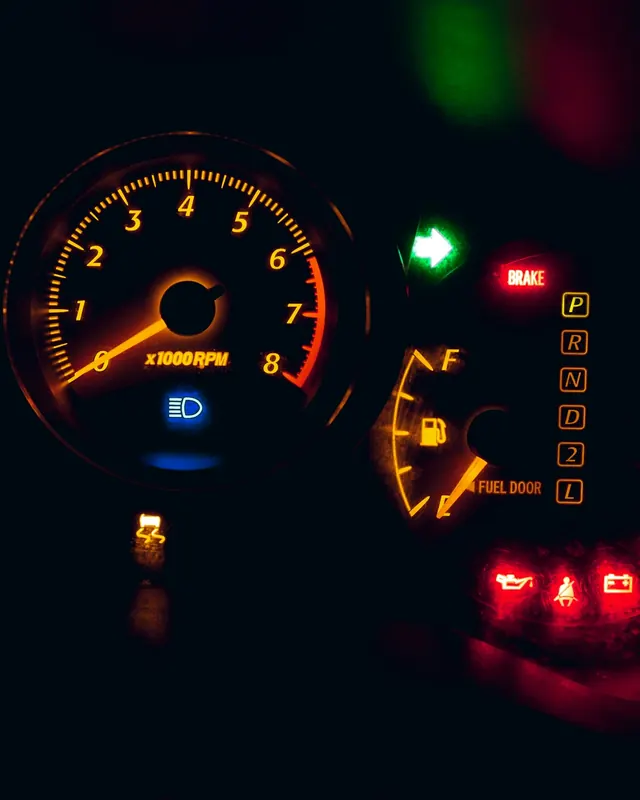
Dashboard Warning Lights: What Each Color Means and Which Ones Mean Pull Over
Red, amber or green? What dashboard warning light colors mean, the lights that mean pull over now, and which ones can wait for a shop visit.
P04B4 Code: What "Refueling Vapor Control Valve Stuck Closed" Means
Got a P04B4 code? What the refueling vapor control valve does on hybrids with a sealed fuel tank, what sets the code, whether it's safe to drive and what to check.
EVAP Leak Code (P0455, P0456, P0442): Is It Just the Gas Cap?
Check engine light with an EVAP leak code like P0455 or P0456? What the codes mean, the gas cap check, other common causes and how urgent it really is.