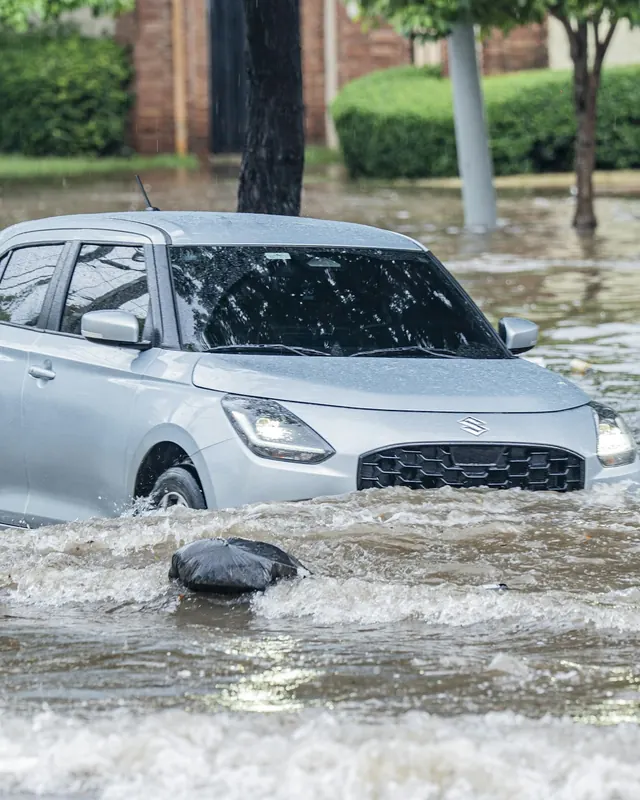
Can Water Damage Your Car's Alternator?
Photo: Aldward Castillo on Unsplash
On this page
- The short answer
- Can rain or a car wash damage an alternator?
- Can driving through deep water damage an alternator?
- How deep is too deep?
- What are the signs of a bad alternator?
- What to do after driving through deep water
- Is it the alternator or the battery?
- When to bring it in
- Recent work like this
- Common questions
The short answer
Rain, a car wash and normal puddles won't hurt an alternator; it's built to handle splashes. Deep or standing water is different: it can get into the bearings and windings and cause corrosion that shows up days or weeks later. If your car went through water above the bottom of the doors, have the charging system tested.
We don't get a lot of rain in Lake Elsinore, but when we do it tends to come all at once. Low spots on surface streets fill up, dirt roads wash out, and every storm someone drives through water that turned out to be deeper than it looked. The alternator is one of the parts that can pay for it, sometimes weeks later.
The alternator is the car's generator. Driven by a belt off the engine, it charges the battery and powers everything electrical while the engine runs: lights, ignition, fuel pump, computers, fans and the radio. The battery mostly just starts the car. If the alternator stops charging, the car runs on battery power until the battery is drained, then it quits.
Can rain or a car wash damage an alternator?
No. Alternators are designed to handle normal road spray, rain and a trip through the car wash, and the air flowing through them for cooling helps them dry quickly. On some engines the alternator sits low, so it's one of the first parts deep water reaches.
Can driving through deep water damage an alternator?
The risk comes from deep or standing water:
- Driving through water deep enough to reach the front of the engine. Water gets pushed into the alternator's bearings and windings.
- A car that sat in a flooded street, parking lot or driveway.
- Repeated soaking, like a work truck that crosses a wash regularly.
Water itself usually isn't what kills the alternator. It's the mud and rust it leaves behind. Contaminated bearings start to whine and grind, and corrosion on the windings and the voltage regulator causes weak or erratic charging. That's why a car can seem fine for a week or two after a flood and then start acting up.
How deep is too deep?
According to the National Weather Service:
- 6 inches of water reaches the bottom of most passenger cars and can cause loss of control and stalling.
- 12 inches can float many vehicles.
- 2 feet of moving water can sweep away most vehicles, including SUVs and pickups.
Beyond the alternator, the bigger risk is the engine. If water gets into the air intake, the engine can suck it in and stall. Water doesn't compress, so it can bend internal parts. Consumer Reports notes that even water below the bumper can stall an engine this way.
What are the signs of a bad alternator?
AAA lists these warning signs, and they match what we see in the shop:
- Battery warning light on the dash while driving
- Dim, flickering or overly bright lights, especially headlights changing brightness with engine speed
- A battery that keeps dying, even after it's replaced
- Whining or grinding from the front of the engine
- A burning rubber or hot electrical smell
- Slow power windows or accessories acting up when several things are on
- Stalling or the engine dying while driving
Any of those after driving through water is worth a charging system test.
What to do after driving through deep water
- If the engine stalled in the water, don't restart it. Have it towed. Trying to crank an engine with water in it is how an engine repair becomes an engine replacement.
- If you made it through, drive slowly for a bit and tap the brakes lightly to dry them.
- Watch the dash for the battery or check engine light over the next few weeks.
- Check the cabin and trunk for wet carpet or a musty smell. NHTSA suggests looking for mud and water marks in hidden spots like under the dash and in the glove box.
- Have it inspected if water came above the bottom of the doors, or if anything feels or sounds different.
Is it the alternator or the battery?
A dead battery and a bad alternator look the same at first: the car won't start. The difference shows up with a test:
| Test result | What it usually means |
|---|---|
| Battery won't hold a charge, alternator output normal | Battery |
| Battery is good, charging voltage low or erratic | Alternator or wiring |
| Both test fine but battery keeps draining | Something drawing power with the car off |
| Charging fine, intermittent problems after a flood | Corroded connections or grounds |
When to bring it in
Bring the car in if a warning light came on, the lights are acting strange, or you drove through water deeper than a normal puddle. Our diagnostic service tests the battery, alternator output and wiring, and looks for corrosion on the connections. If the engine stalled in water, call us before trying to start it, and have it towed in.
Recent work like this at our shop
A few recent jobs from our service records. Vehicle, mileage and month only; no customer details.
| Vehicle | Work | Mileage | When |
|---|---|---|---|
| 2005 Nissan Frontier | Battery | 98,202 mi | Mar 2026 |
| 2016 Hyundai Sonata | Alternator | 212,891 mi | May 2025 |
| 2004 BMW 645Ci | Battery | 159,684 mi | May 2024 |
| 2005 Dodge Magnum | Alternator | 191,890 mi | Oct 2023 |
| 2017 Ford Edge | Battery | 62,437 mi | Aug 2023 |
Common questions
Can driving through a puddle ruin an alternator?
A normal puddle, usually not. Alternators are built to handle splashes, though on some engines they sit low, where deep water reaches them first. The real risk is water deep enough to reach the front of the engine, or a car that sat in standing water.
What are the signs of a bad alternator?
The battery warning light, dim or flickering lights, a battery that keeps dying, a whine or grinding noise from the engine bay, a burning rubber or electrical smell, and slow power windows or accessories. A charging system test tells you whether it's the alternator or the battery.
Should I try to start my car after it's been in a flood?
No. NHTSA advises inspecting a flooded vehicle before starting it, because there can be damage you can't see. Water in the engine can bend parts the moment it tries to turn over, and wet electrical systems can short. Have it towed and checked.
Will a wet alternator dry out on its own?
After a light soaking it often does, and it keeps working. The problem is what water leaves behind: rust in the bearings and corrosion on the connections. That's why problems can show up weeks after the water.
Sources
More from the blog
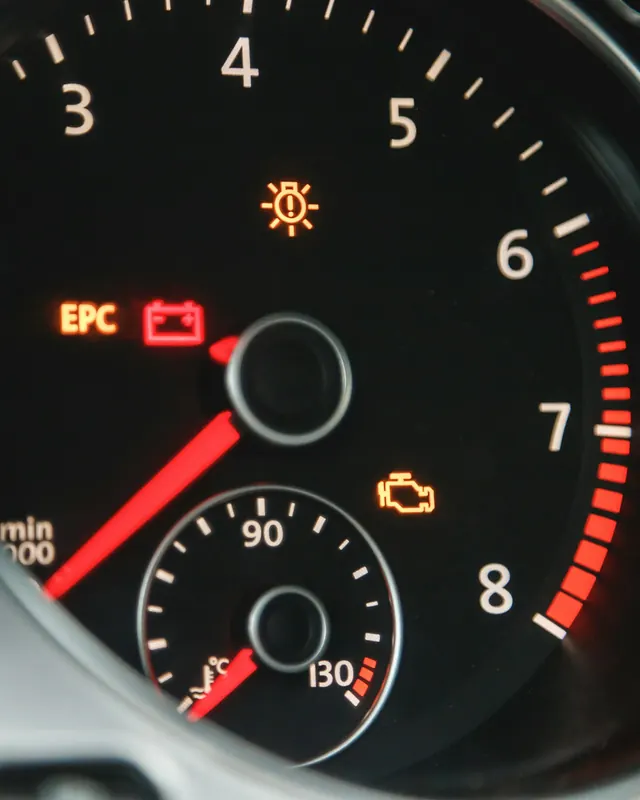
Check Engine Light On? What to Do and When to Stop Driving
Steady or flashing check engine light? What each one means, the gas cap check, what a code read does and doesn't tell you, and when to pull over.
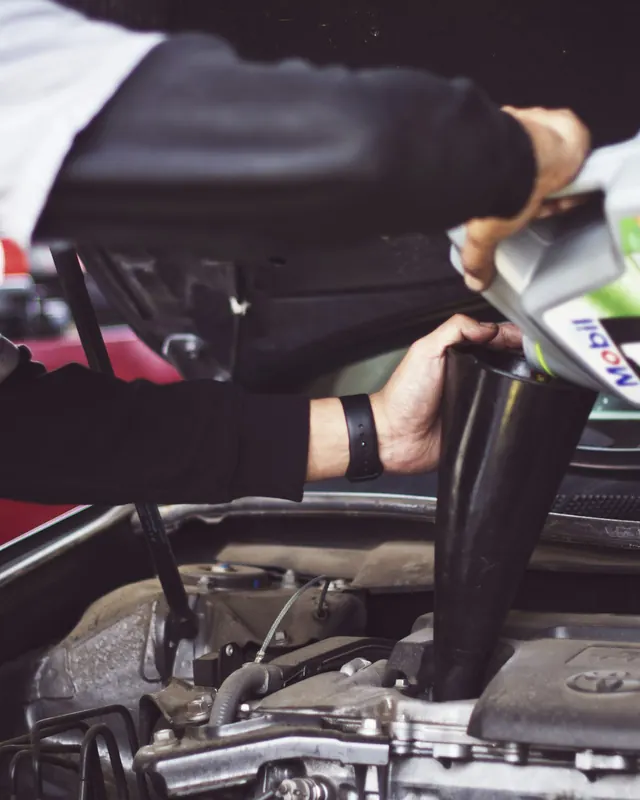
How Often Should You Change Your Oil? (It's Probably Not 3,000 Miles)
The 3,000-mile rule is out of date for most cars. How to find your real oil change interval, when the severe schedule applies and why the once-a-year rule matters.
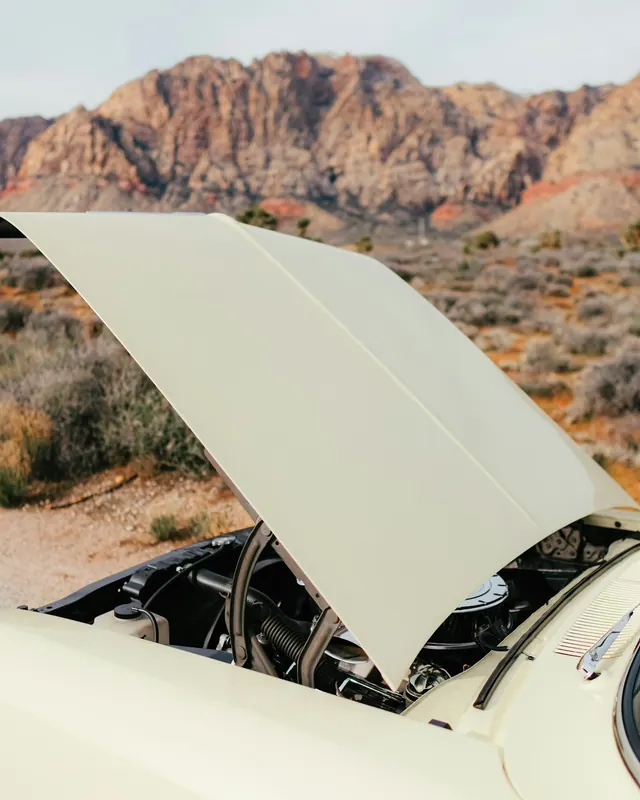
Car Overheating? What to Do Right Away (and What Not to Do)
Temperature gauge climbing or steam from the hood? What to do in the first minute, why the heater helps, why not to open a hot radiator cap and when to tow it.