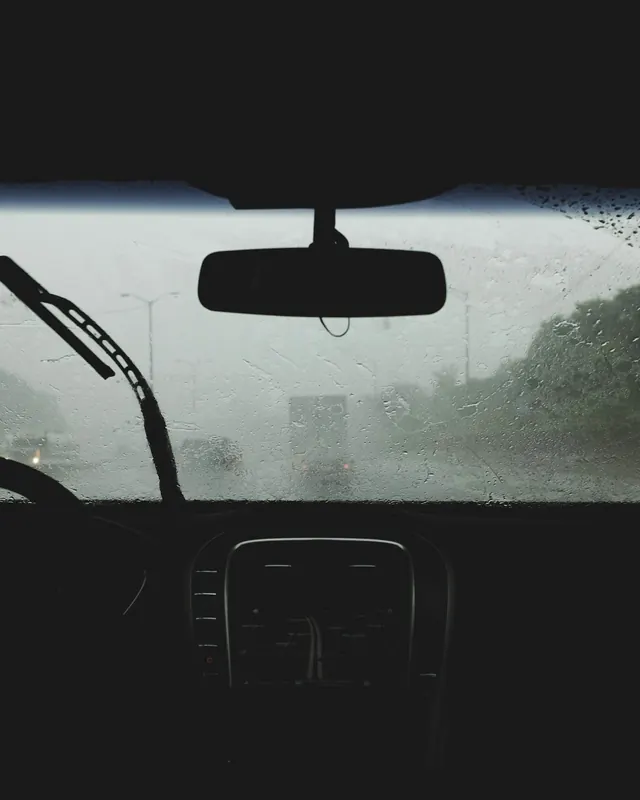
Getting Your Car Ready for a Southern California Winter
Photo: Charlie Deets on Unsplash
On this page
- The short answer
- What does winterizing a car mean in Southern California?
- Does cold weather kill car batteries?
- Tires, wipers and lights for rain
- Fluids, heater and defroster
- Heading to Big Bear or Idyllwild? Chains and Caltrans rules
- A simple winter kit
- When to bring it in
- Recent work like this
- Common questions
The short answer
Winter in the Inland Empire is mostly rain and cold mornings, with trips up to the snow. Before December, test the battery, check tire tread and pressure, replace worn wiper blades, top off coolant and washer fluid, and make sure the heater and defroster work. Heading to Big Bear or Idyllwild, carry chains that fit your tires.
Winter in Lake Elsinore doesn't mean snow in the driveway. It means the first storms of the season, foggy mornings near the lake, temperatures in the 30s before sunrise, and weekend trips up to Big Bear or Idyllwild where conditions are completely different. That combination finds the weak spots on a car. These are the things to check before December.
What does winterizing a car mean in Southern California?
In snow country, winterizing means snow tires and engine block heaters. Here, it's simpler and mostly about four things: starting reliably on cold mornings, seeing clearly in rain, gripping wet roads, and being ready if you head to the mountains. NHTSA's winter checklist covers the same basics: battery, wipers, tires, lights and an emergency kit.
Does cold weather kill car batteries?
Cold weather reduces a battery's power and makes the engine harder to crank. In the Inland Empire, though, it's the heat that wears batteries out. A summer of 100-degree days under the hood breaks a battery down from the inside, and the first cold morning is when it finally can't start the car.
Signs your battery is on its way out:
- Slow cranking, especially first thing in the morning
- Dim headlights or interior lights when starting
- A clicking sound when you turn the key
- A battery more than three or four years old
- White or green crust on the terminals
A load test shows whether the battery can still deliver the power to start the car, so you can replace it on your schedule instead of in a parking lot.
Tires, wipers and lights for rain
The first rain after a long dry stretch is the slickest. Oil and rubber build up on the road all summer and float to the surface. Make sure your car is ready:
- Tire tread. Grip on wet roads drops as tread wears. NHTSA says tires are worn out at 2/32 of an inch; for rain, more is better. Our tire safety checklist walks through the penny test.
- Tire pressure. Pressure drops about a psi for every 10 degrees. Reset it to the door sticker number on a cold morning.
- Wiper blades. A summer in the sun dries out the rubber. If they streak or chatter, replace them now.
- Lights. Every bulb working, and headlights on whenever your wipers are on. That's California law. See our headlight and wiper check.
Fluids, heater and defroster
- Coolant (antifreeze) protects against freezing and overheating and keeps the heater working. Check the level in the reservoir when the engine is cold, and look for leaks under the car.
- Washer fluid. Fill it with real washer fluid. If you're going to the mountains, use a winter blend with de-icer so it doesn't freeze on the glass.
- Oil. If an oil change is coming due, do it before winter driving. The right viscosity for your engine helps on cold starts.
- Heater and defroster. If the heat is weak or slow, it can mean low coolant or a thermostat stuck open, both worth fixing before they become bigger problems.
Heading to Big Bear or Idyllwild? Chains and Caltrans rules
Mountain roads like SR-18 and SR-330 to Big Bear, and SR-74 and SR-243 to Idyllwild, can go to chain controls fast. Caltrans uses three levels:
| Level | What it means for most passenger cars |
|---|---|
| R-1 | Chains required, unless your car or light truck (under 6,000 lb) has snow tires on the drive wheels. You still have to carry chains. |
| R-2 | Chains required, unless you have four-wheel or all-wheel drive with snow-tread tires on all four. You still have to carry chains. |
| R-3 | Chains required on all vehicles, no exceptions. |
Caltrans also recommends checking brakes, wipers, the defroster, heater and exhaust before a mountain trip, making sure your tires have good tread and are properly inflated, and knowing which wheels drive the car, since chains go on the drive wheels. Practice putting chains on in your driveway, not on the shoulder in the snow.
Check Caltrans QuickMap or call (800) 427-7623 for chain controls and road conditions before you leave.
A simple winter kit
Keep these in the trunk from December through March:
- Ice scraper and a small brush or broom
- Flashlight and jumper cables
- Blanket, water and snacks
- Phone charger
- Chains that fit your tires, and gloves, if you go to the mountains
When to bring it in
The easiest way to cover all of this is to have it checked with your next oil change. We'll test the battery and charging system, check tire tread and pressure, look at the brakes, coolant, belts and hoses, and make sure the heater and defroster work. Bring it in before your first mountain trip of the season. See all our services, or call if something specific is acting up.
Recent work like this at our shop
A few recent jobs from our service records. Vehicle, mileage and month only; no customer details.
| Vehicle | Work | Mileage | When |
|---|---|---|---|
| 2005 Honda Accord | Cooling system flush | 134,388 mi | Jul 2026 |
| 2006 Toyota Tundra | Cooling system flush | 132,488 mi | Jul 2026 |
| 2015 Ford F-150 | Tire rotation | 80,684 mi | Jul 2026 |
| 2014 Infiniti Q50 | Cooling system flush | 140,443 mi | Jun 2026 |
| 2009 Toyota Camry | Brake inspection | 107,679 mi | Jun 2026 |
Common questions
Do I need to winterize my car in Southern California?
Not the way people do in snow states, but yes, a short checklist helps. Rain, cold mornings and mountain trips find weak batteries, bald tires and old wiper blades. Most of it can be checked during a regular oil change.
Do I need chains to drive to Big Bear?
When Caltrans posts chain controls, you need chains with you. Under R-1, cars with snow tires on the drive wheels can skip installing them; under R-2, only four-wheel or all-wheel drive with snow-tread tires on all four can. Both must still carry chains, and under R-3 everyone installs them. Check Caltrans QuickMap before you go.
Why does my car battery die in winter?
Cold slows the chemical reaction in the battery and makes the engine harder to turn over. In the Inland Empire, summer heat does the real damage, and the first cold morning just exposes a battery that was already weak.
Should I switch to winter washer fluid?
If you're headed to the mountains, yes. Fluid with de-icer won't freeze on the glass. For valley driving, any good washer fluid beats plain water, which leaves streaks and grows algae in the tank.
Sources
More from the blog
Why Are My Headlights Foggy, and How Do You Fix Them?
What turns plastic headlights cloudy and yellow, how much light you lose, whether restoration kits work, and when a new headlight is the better answer.
Do You Need to Warm Up Your Car Before Driving?
Most modern cars need about 30 seconds, not five minutes. Why long idling wastes fuel, what actually protects your engine on a cold morning, and when to worry.
Days Are Getting Shorter. Check Your Headlights and Wipers Now
Daylight saving time ends Nov 1. A five-minute check of your headlights, signals and wiper blades, and the California rule on headlights in the rain.