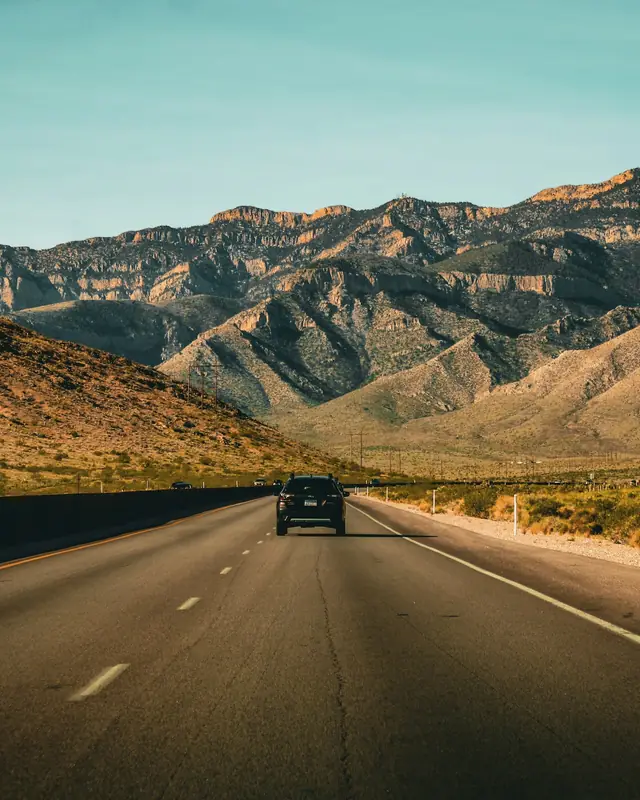
Road Trip Car Checklist: What to Check Before a Holiday Drive
Photo: Victor Svistunov on Unsplash
On this page
- The short answer
- What should I check on my car before a road trip?
- How do I check my tires before a long drive?
- Which fluids should I check, and what do I do if one is low?
- What should a shop check before a road trip?
- Is my car ready for a mountain drive or snow?
- What should I pack in the car?
- When to bring it in
- Recent work like this
- Common questions
The short answer
A week or two before a long drive, check tire pressure (spare included) and tread, look at the oil, coolant and washer fluid, test every light, look over the wipers and run the VIN through NHTSA's recall lookup. Have a shop check the brakes, battery, belts and hoses, and anything that's been making a new noise. Pack a basic roadside kit, and carry chains if the route could go into the mountains.
Thanksgiving is the week a lot of cars that only do school runs and commutes suddenly get loaded up and pointed up the I-15, out to Arizona or into the mountains. A breakdown on a trip like that usually starts with something that was already wearing out at home. Here's what to check yourself, what to have a shop look at, and what to keep in the car before you go.
What should I check on my car before a road trip?
Start with the things you can check in the driveway: tire pressure and tread, fluid levels, lights, wipers and open recalls. Then have a shop look at the parts you can't see well without a lift, like brakes, belts, hoses and the battery.
Here's a simple split:
| Check it yourself | Have a shop check it |
|---|---|
| Tire pressure, including the spare | Brake pads, rotors and brake fluid |
| Tread depth (penny test) | Battery and charging system test |
| Oil, coolant and washer fluid levels | Belts and hoses for cracks or bulges |
| Headlights, brake lights, turn signals | Leaks you can't trace, new noises or vibrations |
| Wiper blades | Suspension and steering parts on a lift |
| Open recalls by VIN | Any warning light that's on |
Do it a week or two ahead. If something turns up, there's time to fix it instead of deciding whether to drive on it.
How do I check my tires before a long drive?
Check pressure with a gauge when the tires are cold, and set them to the number on the sticker in the driver's door frame, not the number on the tire. NHTSA says "cold" means the car hasn't been driven for at least three hours, and reminds you to check the spare too. It also says underinflation is the leading cause of tire failure, which matters more on a long, loaded, high-speed drive than on a trip to the store.
For tread, NHTSA recommends at least 2/32 of an inch on every tire. The quick test: put a penny in the tread with Lincoln's head upside down. If you can see the top of his head, the tire needs replacing.
Look across the whole width of each tire, too. NHTSA notes that uneven wear means the tires need a rotation or the wheels need an alignment before you travel. Our tire safety checklist goes through wear patterns and tire age in more detail.
Which fluids should I check, and what do I do if one is low?
Check the engine oil, coolant and washer fluid yourself. NHTSA also lists brake fluid, automatic transmission or clutch fluid and power steering fluid, and says that if you see any signs of a leak, have the car serviced before you go.
A few things to know while you're under the hood:
- Oil: check it on level ground with the engine off. If you're near the oil change interval in your owner's manual, or the trip will push you past it, do it before you leave. Our post on how often to change your oil covers intervals.
- Coolant: only check the reservoir with the engine cold. Never open a hot radiator cap.
- Washer fluid: fill it. Bugs, dust and road spray go through a lot of it on a long drive.
A fluid that's low once is worth topping off and watching. A fluid that keeps dropping is a leak, and a trip is the wrong time to find out where it's coming from.
What should a shop check before a road trip?
Brakes, battery, belts and hoses, plus anything you've noticed lately. These are the parts that fail on trips and are hard to judge from the driveway.
- Brakes: pad thickness, rotor condition and brake fluid. Long downhill grades like the Cajon Pass coming back south on the I-15 put a lot of heat into brakes.
- Battery: NHTSA recommends having the battery and charging system checked before a trip. A battery that's slow to crank in your driveway can leave you stuck at a gas station two hours away. See the signs a battery is dying.
- Belts and hoses: NHTSA says to look for bulges, blisters, cracks or cuts in the rubber.
- The noise you've been ignoring: a squeal, a clunk or a new vibration at highway speed is worth checking before you add a few hundred miles to it.
Is my car ready for a mountain drive or snow?
If there's any chance of snow on the route, carry chains that fit your tires and practice putting them on at home. Caltrans says to always carry chains in snow country, and to make sure they're the right size and in working order.
California has three chain control levels. Caltrans says R-1 and R-2 are the most common, and a highway will often be closed before R-3 is imposed. Caltrans says vehicles using snow tires must carry chains, and four-wheel and all-wheel drive vehicles must carry traction devices in chain control areas, even when they're exempt from putting them on. Caltrans also says you can be cited by the CHP if you don't put them on when signs say chains are required, and the speed limit under chain controls is 25 or 30 mph.
Caltrans and the CHP also say to make sure your brakes, wipers, defroster, heater and exhaust system are in top condition before heading into snow, and to keep your gas tank full. Our winter car prep post has more on Big Bear and Idyllwild trips.
What should I pack in the car?
A basic roadside kit covers most of what goes wrong on a trip. NHTSA's list includes:
- A phone and charger
- A first aid kit and any medicines you need
- A flashlight, flares and a white flag
- Jumper cables and a tire pressure gauge
- A jack and ground mat for changing a tire
- Work gloves, basic tools and some duct tape
- Water, nonperishable food, paper towels and extra washer fluid
- Blankets, towels and coats
For the mountains, add what Caltrans and the CHP suggest: an ice scraper, a shovel, an old towel and warm clothes. The CHP also suggests keeping an extra car key in your pocket.
When to bring it in
Book a check a week or two before you leave, especially if the car is due for an oil change, a warning light is on or something sounds different. Here's how we go through it:
- Ask where you're going, how loaded the car will be, and whether you're towing.
- Check tire condition and pressure and rotate the tires if they're due.
- Put it on the lift to inspect the brakes, suspension, belts and hoses and look for leaks.
- Test the battery and check the fluids.
- Give you a written estimate before any work, and tell you what needs attention before the trip and what can wait until you're back.
You can see our full list of services, including brake repair and tires and wheels. Repairs carry our 1-year/12,000-mile warranty.
Recent work like this at our shop
A few recent jobs from our service records. Vehicle, mileage and month only; no customer details.
| Vehicle | Work | Mileage | When |
|---|---|---|---|
| 2015 Scion tC | Oil and filter change | 164,169 mi | Sep 2026 |
| 2023 Ford Edge | Oil and filter change | 124,143 mi | Sep 2026 |
| 2024 Toyota Corolla | Oil and filter change | 62,084 mi | Aug 2026 |
| 2025 Ford F-150 | Oil and filter change | 15,973 mi | Aug 2026 |
| 2021 Kia Seltos | Oil and filter change | 200,411 mi | Jul 2026 |
Common questions
How far ahead of a road trip should I get my car checked?
A week or two ahead is a good window. That leaves time to order a part or schedule a repair if the check turns something up, instead of finding out the day before you leave. Things you can check yourself, like tire pressure, are worth doing again the morning you go.
Should I get an oil change before a road trip?
If you're close to the interval in your owner's manual, or the trip will put you past it, it makes sense to do it before you go. If you just had one, a quick look at the dipstick is enough. Long highway miles are easy on oil, but towing, heavy loads and hot weather are not.
What should I keep in the car for a long drive?
NHTSA's list includes a phone and charger, a first aid kit, a flashlight, flares, jumper cables, a tire pressure gauge, a jack, work gloves, basic tools, water, nonperishable food, medicines, extra washer fluid and blankets. For a mountain route in winter, Caltrans and the CHP add chains that fit your tires, an ice scraper and warm clothes.
Do I need chains to drive to the mountains for Thanksgiving?
If your route goes into the snow, carry them. Caltrans says vehicles using snow tires must still carry chains under R-1 controls, and four-wheel and all-wheel drive vehicles must carry traction devices in chain control areas. Check Caltrans QuickMap before you leave, since controls change with the weather.
How do I check if my car has an open recall?
Enter your 17-character VIN at NHTSA.gov/recalls. The VIN is on the driver's side of the dashboard, visible through the windshield, and on your registration and insurance card. If a recall shows up, call a dealer for that brand to schedule the recall repair before the trip.
Sources
More from the blog
Wildfire Smoke and Your Car: Recirculate Mode and the Cabin Air Filter
How to keep wildfire smoke and Santa Ana dust out of your car, when to use recirculate, how often to change the cabin air filter, and the signs it's clogged.
Driving in the First Rain: Why the Roads Get So Slick and What to Do
Why the first rain after a dry summer makes roads so slippery, how to drive it, what to do if you hydroplane, and the tire and wiper checks worth doing first.
Getting Your Car Ready for a Southern California Winter
Winter here means rain, cold mornings and trips to the snow. What to check on your battery, tires, wipers and coolant, plus Caltrans chain rules for Big Bear.