Hybrid Car Maintenance: What's Different and What Stays the Same
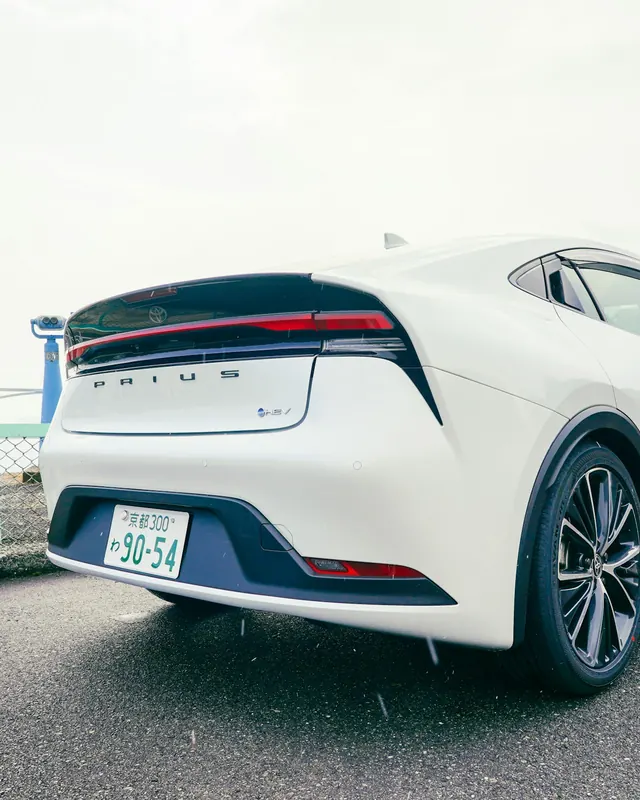
Photo: Zion C on Unsplash
On this page
The short answer
A hybrid needs the same general maintenance as a gas car: oil changes, tire rotations, brake inspections, coolant and filters. The U.S. Department of Energy says hybrid brakes generally last longer because of regenerative braking. The differences are a few extra items, such as inverter coolant and, on many Toyota hybrids, an air filter for the hybrid battery's cooling fan.
You bought a hybrid to burn less gas, and now the first service reminder is on the dash. Do you need a special shop, a special oil, or a whole different schedule? Mostly not. A hybrid still has a gas engine, brakes, tires and coolant, and it needs care like any other car. Here's what stays the same, the few things that are different, and what you can check yourself.
Do hybrid cars need different maintenance?
Hybrid cars need the same general maintenance as conventional cars, according to the U.S. Department of Energy. The gas engine still needs oil and filter changes, the tires still need rotating, and the brakes, belts, hoses and filters still wear. The electric side (the high-voltage battery, motor and electronics) typically needs very little scheduled maintenance.
What changes is the mix. Some parts wear more slowly, a few new items show up on the schedule, and there's one safety rule: leave the orange cables alone.
Here's a quick comparison, using Toyota's 2023 Prius maintenance guide as the example:
| Item | Gas car | Hybrid (2023 Prius example) |
|---|---|---|
| Engine oil and filter | Per owner's manual | Every 10,000 miles or 12 months with 0W-16 oil |
| Brake inspection | Regular inspections | Visual inspection at every 5,000-mile service |
| Engine coolant | Per owner's manual | First replacement at 100,000 miles or 120 months |
| Inverter coolant | Not on most gas cars | First replacement at 150,000 miles or 180 months |
| Hybrid battery cooling filter | Not on gas cars | Check every 5,000 miles, clean every 20,000 miles |
Do hybrids still need oil changes?
Hybrids still need oil changes, because the gas engine works the same way any engine does. The engine shuts off at stops and in slow traffic, but it still burns fuel and wears its oil when it runs.
Toyota's 2023 Prius guide sets the oil change at 10,000 miles or 12 months when the engine is filled with 0W-16 oil. If a shop puts in 0W-20 instead, Toyota says the oil has to be changed at 5,000 miles or six months. That's a good example of why the oil grade matters on a hybrid: use the exact grade your owner's manual lists, not whatever is on the shelf. Our post on synthetic vs conventional oil explains the labels on the bottle.
Dust matters too. Toyota's Prius guide adds an oil and filter change at each 5,000-mile service if you mostly drive on dirt or dusty roads, which describes plenty of back roads around Lake Elsinore and Wildomar. Your owner's manual has your car's list of special conditions.
Do hybrid brakes wear out slower?
Hybrid brakes usually wear out slower than brakes on a gas car. The Department of Energy says hybrid brake systems generally last longer because of regenerative braking. When you slow down, the electric motor works as a generator, which helps slow the car and sends that energy back to the battery.
Slower wear isn't the same as no maintenance. The regular pads and rotors still do the hard stops, and parts that move less can rust or stick. Toyota lists a brake inspection at every 5,000-mile service on the Prius.
Signs a hybrid's brakes need a look:
- Grinding, scraping or a squeal that doesn't go away (our post on why brakes squeak sorts out the noises)
- The car pulls to one side when you brake
- A brake warning light or a change in how the pedal feels
- Heavy rust on the rotors that doesn't clean off after a few stops
Stop driving and call a shop if the pedal sinks toward the floor or the brake warning light stays on.
What coolant does a hybrid need?
Many hybrids use coolant in two places: the engine and the inverter, which is the electronics that control the hybrid system. On the 2023 Prius, Toyota calls for the first engine coolant replacement at 100,000 miles or 120 months and the first inverter coolant replacement at 150,000 miles or 180 months. After that, both are replaced every 50,000 miles or 60 months.
The Department of Energy also notes that some hybrid battery systems use liquid coolant and may need regular checks. Each maker sets its own coolant type and intervals, so the owner's manual is the final word. Use only the coolant it names.
Between services, look at the coolant reservoirs with the car off and cool. A level below the low line, or drips under the front of the car, is worth a check. Our post on coolant leak signs covers what a leak looks and smells like.
What is the hybrid battery air filter?
The hybrid battery air filter is a small filter on the intake that feeds cooling air to the high-voltage battery on many Toyota hybrids. The intake is a vent inside the cabin, often near the rear seat, and your owner's manual shows where yours is. If dust, pet hair or a seat cover blocks it, the battery doesn't get the cooling air it needs, and Toyota notes a clogged vent can affect fuel economy.
Toyota's 2023 Prius guide says to visually check the HV battery cooling intake filter every 5,000 miles and clean it every 20,000 miles. Toyota's 2020 Prius owner's manual says the car can show a "Maintenance required for traction battery cooling parts" message when the vent needs attention. Toyota says to clean it with a vacuum, not compressed air, because blowing air can push dust deeper into the vent.
In our dusty, windy valley, and in a car with a dog in the back seat, check that vent more often than the schedule says. Keep bags and blankets away from it.
What about the 12-volt battery and jump starts?
Many hybrids still have a regular 12-volt battery that runs the lights, computers and locks and wakes up the hybrid system. If it runs down, the car may not start, even when the big hybrid battery is charged. Our post on signs your car battery is dying covers the warning signs.
Not every hybrid works the same way. Kia's 2025 Niro hybrid manual says that car has no regular 12-volt battery that needs periodic replacement; its 12-volt battery is built into the high-voltage battery and has a 12V Battery Reset button to use before trying a jump start. Before you connect jumper cables to any hybrid, read the jump-starting section of your owner's manual.
Whatever the model, never touch the orange cables or orange connectors on a hybrid. The Department of Energy says high-voltage power cables are usually marked in orange, and Toyota's Prius guide tells owners not to touch, remove or replace any high-voltage wiring and connectors. After a crash, Toyota says not to touch the inverter or hybrid battery assembly either.
The parts you can safely check yourself are the same as on any car: tire pressure, the oil level on the dipstick, the coolant level in the reservoirs with the engine cool, the washer fluid, and the battery cooling vent inside the cabin.
When to bring it in
Bring a hybrid in for the regular schedule in your owner's manual, and sooner for a brake noise, a coolant drip, a warning light, or a message about the battery cooling parts. We've done oil changes on Prius, Prius Prime and Ioniq hybrids, plus spark plugs and tire rotations on Priuses, and our brake service covers the regular brakes on hybrids too.
Here's how we'd go through it:
- Check the maintenance history against the owner's manual for your model and mileage.
- Change the oil with the exact grade the manual lists.
- Inspect the brakes, tires and suspension with the wheels off.
- Check engine and inverter coolant levels, hoses and the 12-volt battery.
- Look at the hybrid battery cooling vent and filter.
For a warning light, we start with a diagnostic scan and tell you what we found before any work. You get a written estimate before any work, and repairs carry our 1-year/12,000-mile warranty. Call (951) 445-8055, Monday to Friday, 9 to 5.
Recent work like this at our shop
A few recent jobs from our service records. Vehicle, mileage and month only; no customer details.
| Vehicle | Work | Mileage | When |
|---|---|---|---|
| 2015 Scion tC | Oil and filter change | 164,169 mi | Sep 2026 |
| 2023 Ford Edge | Oil and filter change | 124,143 mi | Sep 2026 |
| 2024 Toyota Corolla | Oil and filter change | 62,084 mi | Aug 2026 |
| 2025 Ford F-150 | Oil and filter change | 15,973 mi | Aug 2026 |
| 2021 Kia Seltos | Oil and filter change | 200,411 mi | Jul 2026 |
Common questions
Do hybrid cars need oil changes?
Yes. A hybrid has a gas engine, and that engine needs oil and filter changes like any other. Toyota's 2023 Prius guide calls for every 10,000 miles or 12 months with 0W-16 oil, and every 5,000 miles or six months if 0W-20 is used instead. Check your own owner's manual for your car's interval and oil grade.
Do hybrid brakes last longer?
Usually. The U.S. Department of Energy says brake systems on hybrids generally last longer than on conventional cars because of regenerative braking, where the electric motor slows the car and charges the battery. The regular brakes still need inspections, and Toyota lists a brake inspection at every 5,000-mile Prius service.
What is inverter coolant?
Inverter coolant is the coolant that keeps the hybrid system's power electronics at a safe temperature. On the 2023 Prius, Toyota calls for the first inverter coolant replacement at 150,000 miles or 180 months, then every 50,000 miles or 60 months. Other hybrids use different intervals.
Can I jump start a hybrid?
Many hybrids can be jump started through their 12-volt system, but the steps depend on the model. Some, like the 2025 Kia Niro hybrid, have no regular 12-volt battery: you press a 12V Battery Reset button first and jump start only if that doesn't work. Follow the jump-starting section of your owner's manual and never connect cables to anything orange.
How long is the hybrid battery warranty?
It depends on the maker and model year. Toyota's 2023 Prius guide covers the hybrid battery for 10 years or 150,000 miles, whichever comes first, from the in-service date.
Sources
- U.S. Department of Energy, Alternative Fuels Data Center, Maintenance and Safety of Hybrid and Plug-In Electric Vehicles
- U.S. Department of Energy, Alternative Fuels Data Center, How Do Hybrid Electric Cars Work?
- Toyota, 2023 Prius Warranty and Maintenance Guide
- Toyota, 2020 Prius Owner's Manual, Cleaning the hybrid battery (traction battery) air intake vent and filter
- Kia, 2025 Niro Owner's Manual, Before jump starting (for hybrid vehicle)
More from the blog

Synthetic vs Conventional Oil: Which One Does Your Car Need?
Synthetic or conventional oil? What your owner's manual requires, what 0W-20 means, when synthetic is worth it, high-mileage oil and whether you can switch.

How Often Should You Change Your Oil? (It's Probably Not 3,000 Miles)
The 3,000-mile rule is out of date for most cars. How to find your real oil change interval, when the severe schedule applies and why the once-a-year rule matters.
Signs of Bad Shocks and Struts: Bouncing, Nose Dive and Leaks
Bouncy ride, nose dive when braking, leaning in turns or oily struts? The signs of worn shocks and struts, how to check them and when to have them looked at.