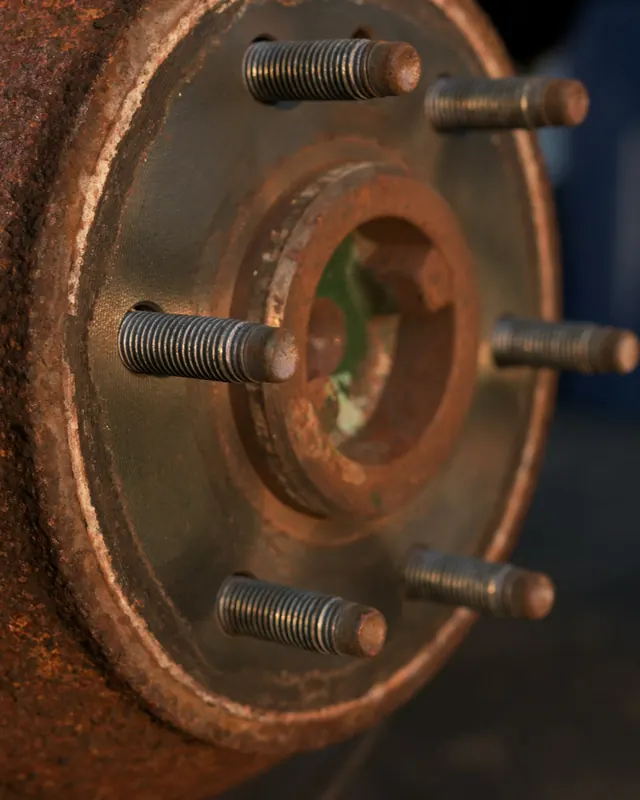
Why Do My Brakes Squeak? What Each Brake Noise Means
Photo: Liam Briese on Unsplash
On this page
The short answer
A squeak on the first few stops of the morning is usually moisture on the rotors and goes away once they dry. A high-pitched squeal that stays is often the pads' built-in wear indicator telling you they're getting thin, so have them measured soon. Grinding means the pads are likely worn through to metal: get it in right away.
Your brakes started making a noise. Maybe it's a squeal at every stop sign, maybe just the first time you back out of the driveway, maybe a grind you can feel through the pedal. Here's what each sound usually means, which ones can wait a week or two, and which ones mean the car shouldn't go far.
Why do my brakes squeak when I stop?
The most common reason is the wear indicator. Many brake pads have a small metal tab built in that touches the rotor once the pad gets thin, and it makes a high-pitched squeal on purpose. (Some cars use a sensor that turns on a dash light instead.) AAA describes it the same way: the sound comes from the wear indicator contacting the rotor, and it means there's very little pad left.
That's not the only cause, though. Brakes also squeak when:
- The rotors are damp or lightly rusted, usually after the car sat overnight or in the rain.
- The pads are glazed. Hard stops or long downhill braking can overheat the pad surface and leave it hard and shiny.
- Hardware is worn or missing. Clips and shims hold the pads still; without them the pad vibrates against the rotor.
- Slide pins are dry or sticking, so the pad drags or sits unevenly.
- Dust and grit get packed in between the pad and rotor, which is easy to do here when the wind kicks up.
The noise alone doesn't tell you which one it is. When it happens does.
Squeal, grind, click or scrape: what each noise means
| What you hear | What it usually means | How soon |
|---|---|---|
| Squeak on the first few stops, then gone | Moisture or light surface rust on the rotors | Usually nothing to do |
| High-pitched squeal that stays | Wear indicator, glazed pads or hardware | Have it checked in the next week or two |
| Grinding or a metal-on-metal growl | Pads worn to the metal backing | Get it in right away |
| Click or clunk when you first brake or change direction | Pads shifting in the bracket, missing clips, or a loose part | Soon; sooner if it's a clunk |
| Steady scraping while driving, not braking | Bent dust shield, a stone caught by the rotor, or a dragging caliper | Soon, before it damages the rotor |
Grinding is the one not to drive on. AAA Mountain West Group says it likely means the pads are completely worn out and the metal backing is scraping the rotors. From there, every stop cuts into the rotor, and the brakes don't stop the car as well as they should.
Why do my brakes squeak in the morning?
Usually it's moisture, and it's harmless. AAA Mountain West Group notes that moisture on the pads and rotors can make brakes squeak for a while, especially in the morning. Overnight dew leaves a thin film of surface rust on bare iron rotors, and the first few stops scrub it off.
You'll notice this more on cold fall mornings and after the first rain of the season, or on a car that sat for a few days. If the noise is gone within a few stops, that's the normal kind. If it's still squealing once the car has been driven a few miles and the brakes are warm, it's something else.
Why do new brakes squeak?
A little noise for the first few stops after a brake job can happen while the new pads and rotors bed in, meaning the pad material evens out on the rotor surface. It should settle down quickly with normal driving.
If new brakes keep squealing, the usual suspects are:
- Shims, clips or slide pins that weren't replaced or lubricated
- Old rotors that weren't resurfaced or replaced, so the new pads don't sit flat
- A pad material that's naturally noisier on that car
- Heavy braking right after the job, before the pads had a chance to bed in
That's a fair thing to bring back to whoever did the work.
Is it safe to drive with squeaky brakes?
A squeak that goes away after a few stops, yes. A steady squeal from a wear indicator, for a short while: it's a warning, not a failure, but don't let it ride for months. The Car Care Council lists squealing alongside grabbing, vibration and a low or hard pedal as signs the brakes should be inspected.
Stop driving it and have it checked before you go further if:
- You hear or feel grinding when you brake
- The pedal feels soft, sinks or goes lower than it used to
- The car pulls hard to one side when you brake
- The red brake warning light stays on with the parking brake released
- You smell burning from a wheel after a normal drive
Long downgrades make worn brakes worse. If your commute includes Ortega Highway (SR-74) or the grades on I-15, use a lower gear going down and don't ride the pedal.
What can I check myself?
You can learn a lot without tools:
- Look through the wheel spokes at the outer pad where it meets the rotor. AAA says that if pad thickness is less than about a quarter inch, you'll likely need to replace them.
- Look at the rotor face. AAA also says visible cracks or grooves are signs a rotor needs to be replaced.
- Compare the wheels. One wheel much dirtier with brake dust than the others, or noticeably hotter after a drive (hold your hand near it, don't touch it), can mean a caliper is dragging.
- Check the brake fluid reservoir under the hood. A low level can mean worn pads or a leak. If it keeps dropping, or you see a puddle under the car, get the brakes checked right away.
What you can't see is the inner pad, which often wears faster, plus the hardware and slide pins. That takes pulling the wheel.
When to bring it in
Bring it in right away for grinding, a soft pedal, pulling or a brake light that stays on. For a squeal that doesn't go away, book a visit in the next week or two. If it only squeaks on damp mornings and quiets down, mention it at your next oil change.
On a brake repair visit we pull the wheels, measure the inner and outer pads, check the rotors for thickness and grooves, look at the calipers, slide pins, hardware, hoses and fluid. You get a written estimate before any work starts. If the car also pulls or the tires are wearing unevenly, we'll check alignment too, since those problems often go together.
For how often to have brakes inspected and how long pads and rotors usually last, see our post on how often you should get your brakes checked. You can call us at (951) 445-8055 or book a visit online.
Recent work like this at our shop
A few recent jobs from our service records. Vehicle, mileage and month only; no customer details.
| Vehicle | Work | Mileage | When |
|---|---|---|---|
| 2023 Ford Edge | Brake pads, Rear brake rotors | 124,143 mi | Sep 2026 |
| 2009 Toyota Camry | Brake inspection | 107,679 mi | Jun 2026 |
| 2025 Volkswagen Jetta | Brake inspection, Brake pads, Rear brake rotors | 33,897 mi | Apr 2026 |
| 2010 Mazda 3 | Brake pads, Rear brake rotors | 250,149 mi | Mar 2026 |
| 2013 Toyota Tundra | Brake inspection, Brake pads, Front brake rotors | 138,321 mi | Mar 2026 |
Common questions
Why do my brakes squeak but the pads are fine?
Pads with plenty of material can still squeak. Common causes are moisture or light rust on the rotors, glazed pads from heavy braking, missing or worn anti-rattle hardware, dried-out slide pins and brake dust. These aren't usually urgent, but a noise that keeps coming back is worth having looked at.
Why do my brakes squeak when I'm not pressing the pedal?
On some cars the wear indicator can touch the rotor and squeal while you're driving, then change or stop when you brake. It can also be a stuck caliper, a bent dust shield or a small stone caught behind the rotor. Since a dragging brake can overheat, don't let this one go for long.
Is it normal for new brakes to squeak?
A little noise for the first few stops can happen while new pads and rotors bed in. A squeal that's still there after a few days of normal driving isn't normal and usually points to hardware, lubrication or the pad and rotor surfaces. Have the shop that did the work take a look.
Can I just spray something on squeaky brakes?
Don't spray lubricant or cleaner near the pads or rotors while they're on the car. Anything that gets on the friction surfaces can make the brakes grab or slip. Quieting a squeak properly means finding where it comes from, which usually means pulling the wheel.
How thin is too thin for brake pads?
AAA says that if pad thickness is less than about a quarter inch, you'll likely need to replace them. Your car's service information has the exact minimum, and the inner pad often wears faster than the outer one you can see through the wheel.
Sources
More from the blog
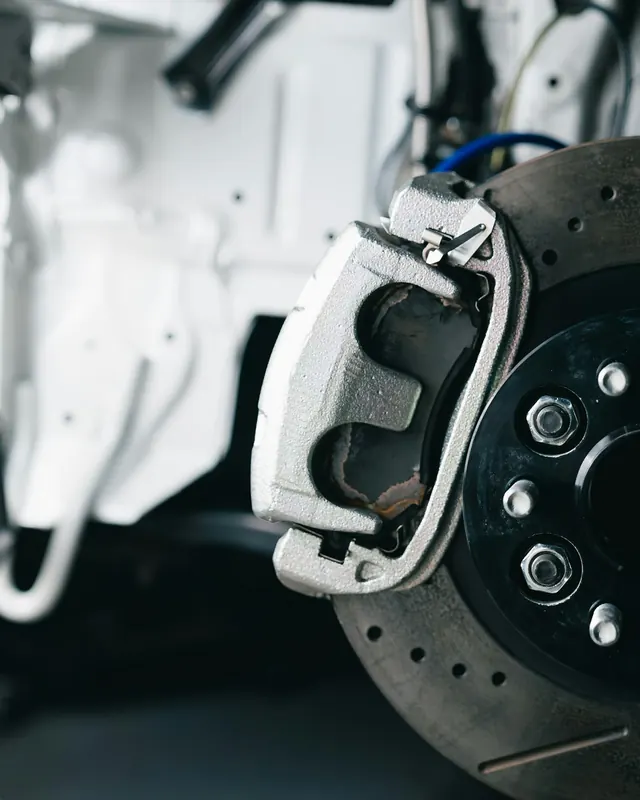
How Often Should You Get Your Brakes Checked?
How often to have your brakes checked, the warning signs that can't wait, and what a brake inspection actually covers, from our Lake Elsinore mechanics.
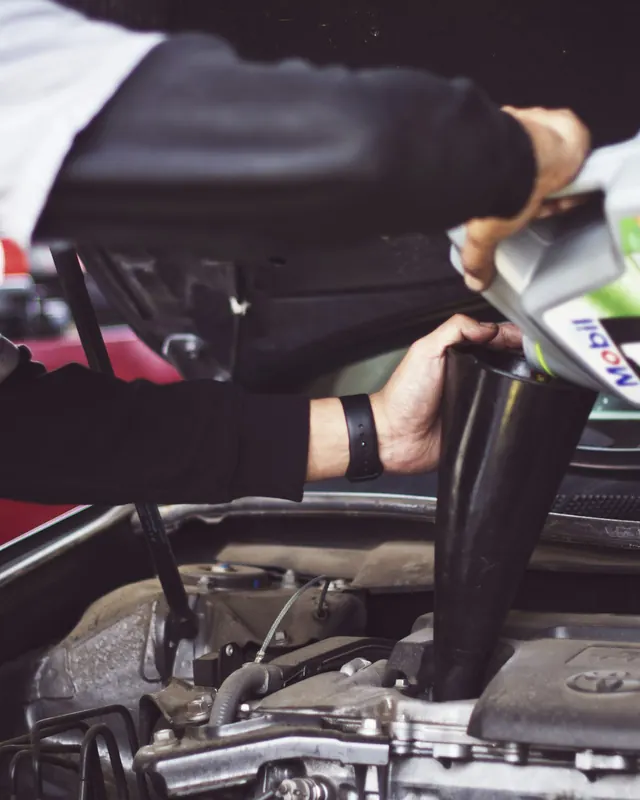
How Often Should You Change Your Oil? (It's Probably Not 3,000 Miles)
The 3,000-mile rule is out of date for most cars. How to find your real oil change interval, when the severe schedule applies and why the once-a-year rule matters.
Car Overheating? What to Do Right Away (and What Not to Do)
Temperature gauge climbing or steam from the hood? What to do in the first minute, why the heater helps, why not to open a hot radiator cap and when to tow it.