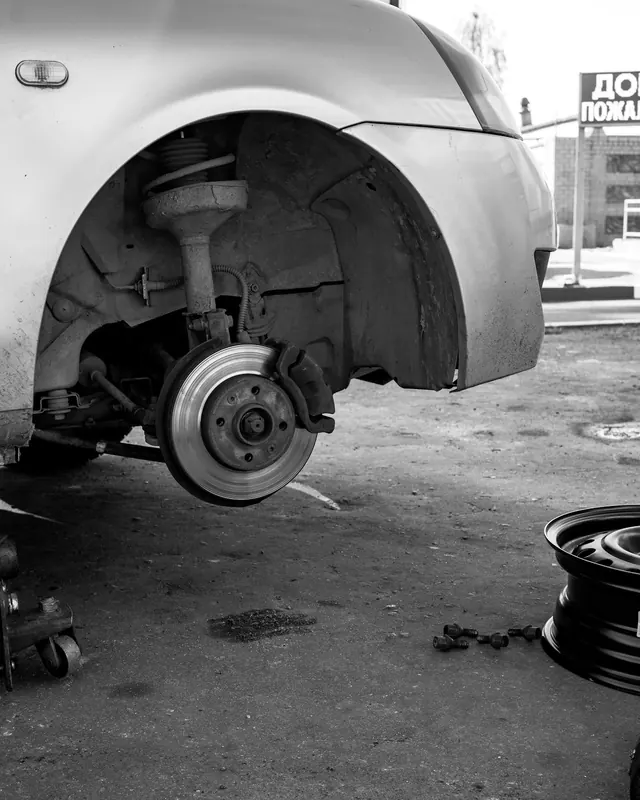
Signs of Bad Shocks and Struts: Bouncing, Nose Dive and Leaks
Photo: Yuriy Vertikov on Unsplash
On this page
- The short answer
- What do shocks and struts actually do?
- What are the signs of bad shocks and struts?
- Do worn struts affect braking?
- How can I check my shocks and struts at home?
- How long do shocks and struts last?
- Can you drive with worn shocks or struts?
- When to bring it in
- Recent work like this
- Common questions
The short answer
The most common signs of worn shocks and struts are a car that keeps bouncing after bumps, a front end that dives hard when you brake, more lean in turns, clunks over bumps, oily fluid on the shock or strut body, and tires with a scalloped, cupped wear pattern. Kelley Blue Book says they typically last 50,000 to 100,000 miles, so the signs usually creep in slowly and are easy to get used to. A road test and a look on a lift tell you more than a bounce test alone.
Your car floats over dips on the freeway, the nose drops every time you brake, or it rocks a few extra times after a speed bump. Those are the classic signs of worn shocks and struts, and because they wear out slowly, most drivers get used to the change without noticing. Here's what each sign means, what you can check in your driveway, and how soon it needs attention.
What do shocks and struts actually do?
Shocks and struts control how fast your springs move. The springs hold the car up. The shocks and struts are hydraulic dampers that slow the springs down, so the car settles after a bump instead of bouncing, and the tires stay pressed to the road.
A shock absorber is just the damper. A strut is a damper built into a structural part of the suspension, usually with the coil spring wrapped around it, and it helps hold the wheel in position. Most passenger cars have struts in front and either struts or shocks in the rear. Many pickups and larger SUVs use shocks at all four corners.
Ray Magliozzi of Car Talk puts it simply: the shocks are what keep the tires planted on the road, even over bumps. When the damping wears out, the tires spend less time pushing on the pavement, and that affects braking and steering as much as comfort.
What are the signs of bad shocks and struts?
The signs show up in how the car moves, how it sounds and how the tires wear. Kelley Blue Book and KYB, a shock and strut maker, list most of these:
| What you notice | What it usually means |
|---|---|
| Car keeps bouncing or floating after bumps and dips | Worn dampers can't settle the springs |
| Front end dives hard when you brake | Front struts not controlling weight shift |
| Rear squats and the nose lifts when you accelerate | Worn rear shocks or struts |
| More lean or sway in turns and on ramps | Worn dampers, sometimes worn sway bar links too |
| Clunk or knock over potholes and speed bumps | Worn strut mounts, bump stops or loose parts |
| Oily fluid on the shock or strut body | Seal leaking damper fluid |
| Scalloped, cupped tire wear | Tire bouncing as it rolls |
Kelley Blue Book calls extra bouncing one of the most significant signs. On roads around here, the long dips on I-15 and the speed humps in neighborhood streets are good places to notice it.
Cupped tires are worth a closer look. KYB explains that when a tire is allowed to move up and down too much, a rhythmic motion sets in and leaves an evenly spaced wear pattern around the tread, along with more tire noise. Run your hand around the tread: high and low patches every few inches point to the suspension, not just the tire.
Do worn struts affect braking?
Yes. Worn shocks and struts make a car stop worse, not just ride worse. KYB says stopping distances in a quick stop increase as shocks wear, and that the hard nose dive in braking also reduces how much work the rear brakes can do, because weight comes off the back of the car.
Worn dampers also let the car lean and shift more in turns and swerves, so it takes longer to settle and grip. That matters most in a panic stop, on a wet road, or on curvy grades like Ortega Highway (SR-74).
If the car pulls or the pedal feels different when you brake, have the brakes checked too. Our brake repair inspection covers both, since the two systems affect each other.
How can I check my shocks and struts at home?
A driver can do three useful checks with nothing more than a flashlight:
- The bounce test. Push down hard on the bumper at one corner and let go. Car Talk describes it this way: a good shock brings the car back up and stops, while a worn one keeps it going up and down. Try all four corners.
- A look for leaks. With a flashlight, look at the shock or strut behind each wheel. A light film is common on older parts. Wet, oily fluid running down the body, or dirt caked onto a wet coating, points to a leaking seal.
- A road test you pay attention to. KYB says a road test is the best way to judge shocks and struts. Pay attention over a few dips, a firm stop and a slow turn. Notice bouncing, nose dive, lean and noises over bumps.
The bounce test has limits. It catches a damper that has badly failed, but one that has lost some of its control can still pass. Leaks can mislead too: Magliozzi notes that some shocks seep well before they fail, and some fail before they seep.
How long do shocks and struts last?
Kelley Blue Book says shocks and struts typically last from 50,000 to 100,000 miles, and sometimes 100,000 miles or more. How long yours last depends on the roads you drive, how much weight you carry and how fast you take bumps.
Cars that tow, carry heavy loads, or see a lot of rough or dirt roads tend to land at the low end. Check your owner's manual for what your car's maker recommends, and have the suspension looked at whenever the tires are rotated or the car is on a lift for other work.
When they are replaced, Kelley Blue Book recommends doing it in pairs, both fronts or both rears, so each side of the car responds the same way.
Can you drive with worn shocks or struts?
Usually yes, for a while, but it isn't something to put off for months. Worn dampers mean longer stops and less grip in a swerve, and they keep wearing your tires unevenly the whole time.
Have it checked soon, and before any long or fast trips, if:
- A strut is visibly dripping fluid, or the car sits lower at one corner (often a broken or sagging spring).
- The car pulls, wanders or feels loose in the steering.
- You hear a loud bang or metal-on-metal clunk over bumps.
- A tire is wearing in cups.
Worn struts are often found along with other worn parts. Control arm bushings, sway bar links and strut mounts can make similar clunks, and our post on why a steering wheel shakes at highway speed covers the tire and wheel causes of vibration.
When to bring it in
Bring the car in if it bounces after bumps, dives hard when you brake, leans more than it used to, clunks over bumps, or shows fluid on a shock or strut. Here's what we check, in order:
- Road test the car over bumps, in a firm stop and through turns to feel what you're feeling.
- Put it on a lift and inspect each shock and strut for leaks, damage and worn mounts or bump stops.
- Check the parts that cause similar symptoms: control arms and bushings, sway bar links, ball joints, tie rod ends and wheel bearings.
- Look at the tires for cupping or edge wear and check the alignment, since new struts usually call for an alignment afterward.
- Give you a written estimate before any work starts, with what needs to be done now and what can wait.
You can read more about our steering and suspension repair and our tire and wheel services, including alignments. Our repairs carry a 1-year/12,000-mile warranty.
Recent work like this at our shop
A few recent jobs from our service records. Vehicle, mileage and month only; no customer details.
| Vehicle | Work | Mileage | When |
|---|---|---|---|
| 2005 Honda Accord | Control arms | 134,388 mi | Jul 2026 |
| 2019 Infiniti QX50 | Control arms | 127,052 mi | May 2026 |
| 2014 Ford F-150 | Control arms | 135,477 mi | Feb 2026 |
| 2013 Nissan Sentra | Shocks and struts | 144,000 mi | Jul 2025 |
| 2006 Toyota Highlander | Control arms | 187,228 mi | Feb 2025 |
Common questions
How long do shocks and struts last?
Kelley Blue Book says shocks and struts typically last from 50,000 to 100,000 miles, and sometimes longer. Rough roads, heavy loads and hitting bumps fast wear them sooner. Check your owner's manual for what your car's maker recommends.
Is it safe to drive with bad struts?
A car with worn struts will still drive, but it doesn't stop, turn or handle bumps as well. KYB, a shock and strut maker, says stopping distances in a quick stop increase as shocks wear. If a strut is leaking heavily, the car pulls or wanders, or you hear a loud bang or clunk, have it checked before any long or fast trips.
Does the bounce test really work?
The bounce test catches a shock or strut that has badly failed. Push down hard on the bumper at one corner and let go: a good one comes back up and stops, while a worn one keeps going up and down. A shock that has only lost some of its control can still pass, which is why a road test and a visual check matter too.
Do shocks and struts have to be replaced in pairs?
Kelley Blue Book recommends replacing them in pairs, both fronts or both rears, so the two sides of the car react to bumps the same way. A new part on one side and a worn one on the other can make the car feel uneven.
Is a little oil on a shock a problem?
Not always. A light film of seepage is common on older shocks, and Car Talk's Ray Magliozzi notes that some shocks seep well before they fail while others fail before they seep. Fluid that is dripping, or wet and coated with road dirt down the body, is a reason to have it checked.
Sources
More from the blog
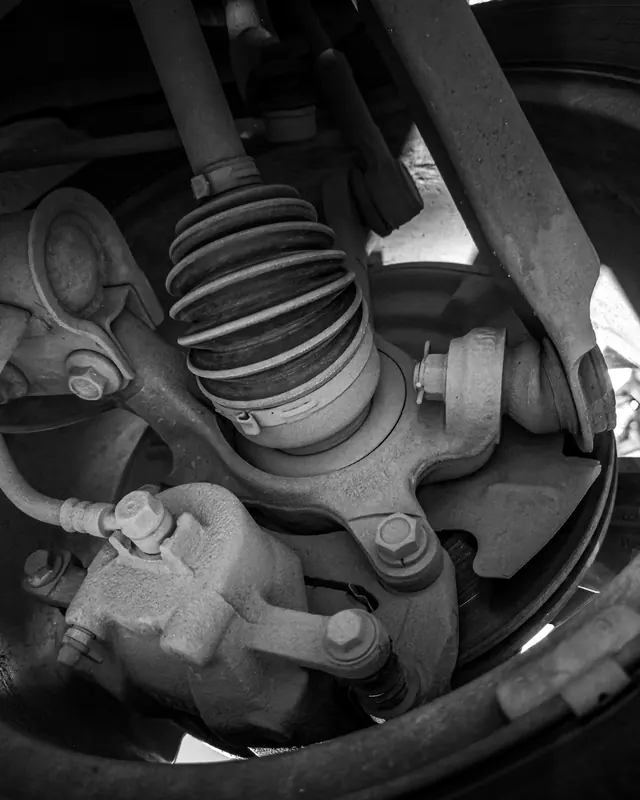
Clicking Noise When Turning? Signs of a Bad CV Axle or Torn Boot
A clicking or popping sound on tight turns usually points to a worn CV joint. What it means, how to spot a torn CV boot and how soon to have it checked.
Do I Need a Transmission Fluid Change? What "Lifetime" Fluid Means
Your manual says lifetime fluid, but does it ever need changing? Intervals, severe service, drain and fill vs flush, CVTs and what the fluid color tells you.

Road Trip Car Checklist: What to Check Before a Holiday Drive
Driving out of town for Thanksgiving? What to check on your car yourself, what to have a shop look at, and what to pack before the I-15 or a mountain drive.