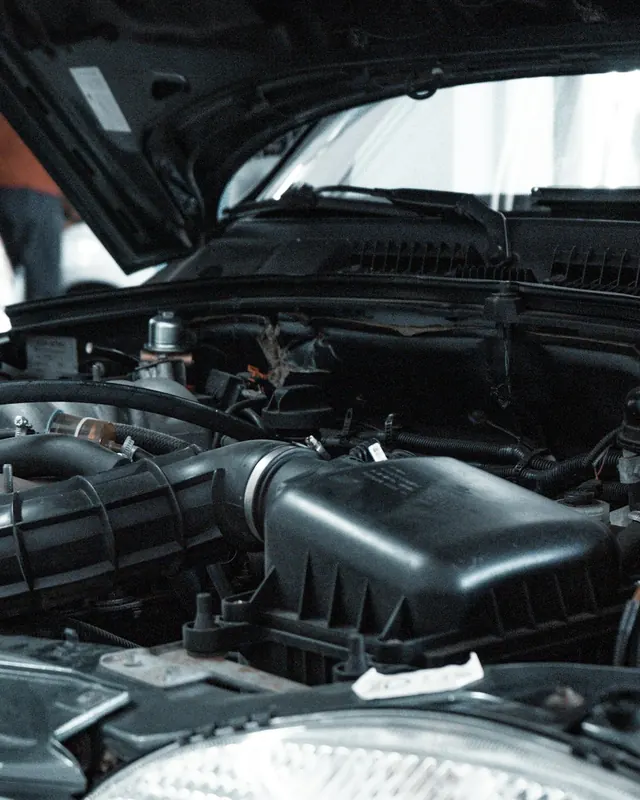
Coolant Leak Signs: Puddle Colors, Sweet Smells and What to Do
Photo: Kate Ibragimova on Unsplash
On this page
- The short answer
- What are the signs of a coolant leak?
- What color is coolant, and how do I know the puddle is coolant?
- Where do coolant leaks usually come from?
- Is it safe to drive with a coolant leak?
- What can I check myself?
- Can a bad thermostat or overheating look like a leak?
- When to bring it in
- Recent work like this
- Common questions
The short answer
The common signs of a coolant leak are a brightly colored puddle under the front of the car, a sweet smell after you shut the engine off, a reservoir that keeps dropping, steam from under the hood and a temperature gauge that runs high. The cooling system is sealed, so any coolant loss means a leak somewhere. A small seep can wait a few days if you watch the level; steam or a climbing gauge means stop driving.
You backed out of the driveway and there's a bright green or orange spot where the car was parked. Or you keep catching a sweet, syrupy smell after a drive. Both usually mean the same thing: coolant is getting out. Here's how to confirm it, where it's most likely coming from, and how to tell a slow seep you can watch from a leak that should keep the car parked.
What are the signs of a coolant leak?
The most common signs are a colored puddle under the front of the car, a sweet smell, a reservoir level that keeps dropping and an engine that runs hotter than usual. You might notice just one of these, or several.
- A puddle under the engine. AAA Club Alliance calls this the clearest sign. It's usually toward the front of the car, under the radiator or engine.
- A sweet smell. If coolant drips on hot parts, it burns off and leaves a sweet odor, often strongest right after you shut the engine off.
- The reservoir keeps going down. The plastic tank with MIN and MAX marks should stay put between top-offs. If you're adding coolant every week, something is leaking.
- The temperature gauge runs high or climbs faster than it used to.
- Steam from under the hood. AAA says coolant leaking while the engine is running will create steam.
- Crusty residue (white, green or pink) around hose ends, the radiator or the water pump. That's dried coolant from a slow seep.
What color is coolant, and how do I know the puddle is coolant?
Coolant is dyed so you can spot it. Depending on the type, it can be green, orange, pink, blue, yellow, red or purple, and it looks thinner and more watery than oil, with a sweet smell. The color and the spot under the car tell you most of what you need to know.
| What you see under the car | Usually means |
|---|---|
| Green, orange, pink, blue, yellow, purple or red, thin, smells sweet | Coolant |
| Gold to dark brown, slippery | Engine oil |
| Red, under the middle of the car, oily with no sweet smell | Often transmission fluid |
| Clear water, no smell, front passenger side | A/C condensation (normal) |
That last one is worth knowing in the valley. After a warm afternoon with the A/C running, a clear drip near the front passenger side is normal and not a leak.
A quick test: slide a piece of white cardboard under the front of the car overnight. In the morning you'll see the color and roughly where it's dripping from, which helps narrow down the source.
Where do coolant leaks usually come from?
Most leaks come from a handful of places. Among the common causes of overheating, AAA lists cracked or leaking hoses, a cracked water pump, a rusty radiator or cracked cap, and a leaking head gasket.
- Radiator hoses. Rubber hoses get soft, swollen or cracked with age and heat. Leaks often start where the hose clamps onto a fitting.
- The radiator. Plastic end tanks can crack, and metal cores can corrode and seep. Look for wet spots or crust along the seams.
- The water pump. Most pumps have a small weep hole that drips when the internal seal starts to fail. A dried trail under the pump is a common early sign.
- The coolant reservoir and cap. Plastic tanks crack over time, and a worn cap can let coolant escape as steam.
- The heater core. It sits behind the dashboard. A leak there can fog the windshield with a greasy film, leave a damp passenger floor mat or a sweet smell inside the car.
- Inside the engine. If the level drops but there's no puddle anywhere, coolant may be leaking internally, for example past a head gasket. White exhaust smoke that smells sweet is one clue. This one needs testing at a shop.
Is it safe to drive with a coolant leak?
It depends on how fast it's going. A slow seep where the level drops a little over several days is usually fine to drive to a shop, as long as you keep the reservoir filled with the right coolant and watch the temperature gauge.
Stop driving if any of these happen:
- The gauge climbs toward hot or a temperature warning light comes on.
- You see steam from under the hood.
- The reservoir empties in a day or two, or you see a steady drip while the engine runs.
AAA Club Alliance warns that an overheating engine can suffer damage that's impossible to repair, so it's not worth stretching. If you're on I-15 or climbing Ortega Highway and the needle starts moving, pull over somewhere safe. Our post on what to do when your car is overheating walks through the first few minutes.
What can I check myself?
You can do a lot of the detective work in your driveway without tools:
- Wait until the engine is cold. AAA Club Alliance advises never opening the radiator cap or the cooling system on a hot engine and waiting at least 40 minutes after shutting it off. Hot coolant is under pressure and can burn you.
- Check the reservoir level against the MIN and MAX marks.
- Look under the car with a flashlight for drips, and use the cardboard test overnight.
- Look at the hoses and around the radiator for wet spots, crust or swollen, cracked rubber. Don't squeeze hoses on a hot engine.
- Notice the smell and the gauge on your next drive.
If you need to top off, use the coolant type your owner's manual specifies. Mixing types can cause problems, and plain water dilutes the protection. The Car Care Council's advice is simple: check coolant level frequently and change it on the schedule in your owner's manual.
One more reason not to put it off: many coolants are ethylene glycol, which tastes sweet to animals. The Merck Veterinary Manual says as little as 1 to 2 teaspoons can be lethal for a cat. Clean up puddles right away, especially if pets are around the driveway.
Can a bad thermostat or overheating look like a leak?
Sometimes. A thermostat stuck closed makes the engine run hot without losing any coolant, and an overheated engine can push coolant out through the reservoir overflow, which looks like a leak. If the gauge is acting up but the level stays steady, read our guide to bad thermostat symptoms. If the level keeps dropping, assume a leak until it's found.
When to bring it in
Bring it in soon if you're topping off regularly, smell coolant, or see a puddle. If the gauge is climbing or there's steam, don't drive it here; have it towed.
Here's what we check, in order:
- Check the coolant level and condition and look over the hoses, radiator, water pump and reservoir.
- Pressure test the cooling system. This pushes the system to its normal pressure with the engine off, so even a small leak shows itself.
- If there's no outside leak, test for an internal leak, such as a head gasket problem.
- Give you a written estimate before any work starts.
Most coolant leaks turn out to be a hose, the radiator, the water pump or the reservoir. Once it's fixed, we refill with the right coolant and bleed the air out, and recommend a cooling system flush only if the coolant is due or contaminated. You can read more about our engine and cooling system repair, or book a diagnostic if you're not sure what's going on. Our repairs carry a 1-year/12,000-mile warranty.
Recent work like this at our shop
A few recent jobs from our service records. Vehicle, mileage and month only; no customer details.
| Vehicle | Work | Mileage | When |
|---|---|---|---|
| 2005 Honda Accord | Radiator, Cooling system flush | 134,388 mi | Jul 2026 |
| 2006 Toyota Tundra | Cooling system flush | 132,488 mi | Jul 2026 |
| 2020 Ram 1500 | Water pump | 108,493 mi | Jul 2026 |
| 2014 Infiniti Q50 | Radiator, Cooling system flush | 140,443 mi | Jun 2026 |
| 2021 Jeep Wrangler | Radiator | 60,713 mi | Jan 2026 |
Common questions
What color is coolant when it leaks?
Usually green, orange, pink, blue, yellow, red or purple, depending on the type in your car. AAA notes that leaked coolant also has a sweet smell, which helps tell it apart from oil (gold to dark brown) and transmission fluid (usually red). Clear water under the front passenger side on a hot day is normally just A/C condensation.
Is it safe to drive with a coolant leak?
It depends on how fast it's leaking. A slow seep, where the reservoir drops a little over a week, can usually be driven to a shop if you keep the level topped up with the right coolant and watch the gauge. If you see steam, the gauge climbs, or the reservoir empties in a day or two, stop driving, because overheating can badly damage the engine.
Why does my car smell sweet but there's no puddle?
Coolant can drip onto hot engine parts and burn off before it reaches the ground, which is why AAA Club Alliance lists a sweet smell after you shut the engine off as a leak sign. A sweet smell inside the car, especially with a greasy film on the windshield or a damp floor mat, can point to the heater core behind the dashboard.
Can I just add coolant and keep driving?
Topping up buys time, it doesn't fix anything. The cooling system is closed, so if the level drops, coolant is going somewhere. Add the type your owner's manual calls for, only with the engine cold, and have the leak found before it gets bigger.
Is leaking coolant dangerous for pets?
Yes. Many coolants are ethylene glycol, which tastes sweet. The Merck Veterinary Manual says as little as 3 to 4 teaspoons can be lethal for a dog and 1 to 2 teaspoons for a cat. Clean up any puddle right away; covering it with cat litter or sawdust first helps soak it up.
Sources
More from the blog
Bad Thermostat Symptoms: Stuck Open vs Stuck Closed
Gauge stuck on cold, weak heat, or an engine that runs hot fast? How to tell a thermostat stuck open from one stuck closed, what P0128 means and when to fix it.
Why Is My Car's A/C Blowing Warm Air?
Car A/C blowing warm air? Common causes, from a refrigerant leak to a compressor that won't engage, what you can check yourself and why a recharge is not the fix.
Car Overheating? What to Do Right Away (and What Not to Do)
Temperature gauge climbing or steam from the hood? What to do in the first minute, why the heater helps, why not to open a hot radiator cap and when to tow it.