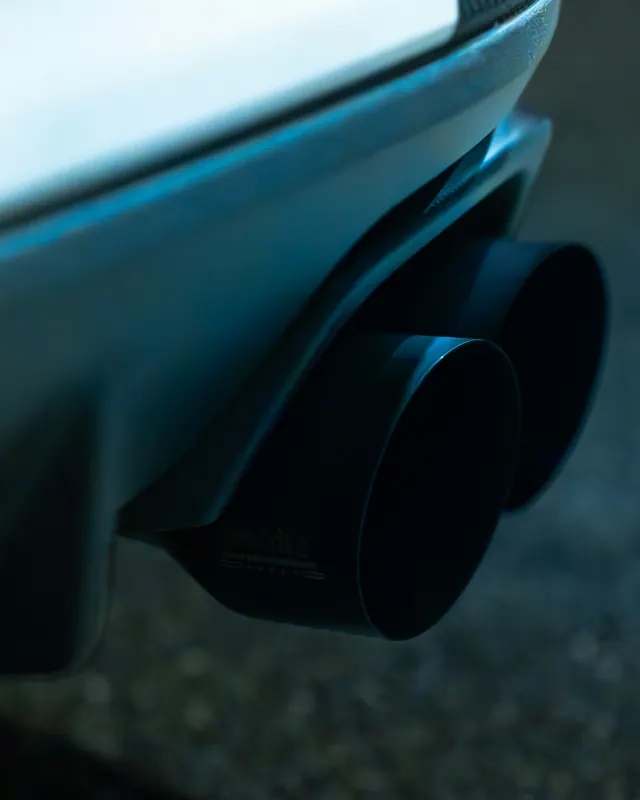
Exhaust Leak Symptoms: Ticking, Loud Exhaust and Fumes in the Car
Photo: Kenneth Li on Unsplash
On this page
The short answer
The common signs of an exhaust leak are a ticking or puffing sound, often loudest on a cold start, an exhaust that's suddenly louder, a smell of fuel or exhaust inside the car and worse gas mileage. The car will still run, but a leak can let carbon monoxide into the cabin, which you can't see or smell. If you smell exhaust inside the car, drive with the windows open and have it checked soon.
You start the car on a cold morning and hear a ticking from under the hood that wasn't there before. Or the car just sounds louder, or you catch a whiff of exhaust with the windows up. Those are the classic signs of an exhaust leak. Here's what each one usually means, why a smell inside the car is the one to take seriously, and what you can check yourself first.
What are the signs of an exhaust leak?
The most common signs are a new noise, a louder exhaust, a fuel or exhaust smell, and worse gas mileage. AAA Club Alliance notes the car will still run, but you'll likely notice signs that something isn't right.
- Ticking, tapping or puffing, often loudest on a cold start and faster as you rev the engine. The Drive lists buzzing, hissing, ticking, popping and puffing as typical leak sounds.
- A louder exhaust than usual. Cars.com calls a loud or hissing exhaust a good indicator of a leak, and AAA says to have it checked if the car seems louder than it used to.
- A smell of fuel or exhaust inside the car, especially at idle or with the windows up.
- Worse gas mileage than you're used to on the same drives.
- A check engine light, when the leak is close enough to an oxygen sensor to throw off its reading.
- Black soot marks around a joint, gasket or pipe, which The Drive points out as a clue to where the leak is.
- A rattle or a pipe hanging lower than normal, which usually means a broken hanger (the rubber or metal mount that holds the pipe up) or a loose connection.
What does an exhaust leak sound like?
It depends on where the leak is. A leak near the engine, at the exhaust manifold (the part bolted to the engine that collects the exhaust) or its gasket, usually makes a sharp ticking or puffing that keeps time with the engine. A leak farther back, at a pipe joint or the muffler, sounds more like a deep rumble, a hiss or a raspy drone.
| What you hear | Where it's often coming from |
|---|---|
| Ticking or tapping at startup that fades as the engine warms | Exhaust manifold gasket or a small crack in the manifold |
| Puffing or hissing that rises with engine speed | A joint, gasket or flex pipe (a short braided section that lets the pipe move with the engine) |
| Deep rumble or drone, louder under the middle or back of the car | A hole in a pipe or the muffler |
| Rattle over bumps | A broken hanger, loose heat shield or loose clamp |
| Sudden roar on the first start of the day | A broken pipe, or a cut-out catalytic converter |
That cold-start ticking is one of the most common versions we hear, and it shows up more on the colder winter mornings in the valley. A small gap at the manifold opens up when the metal is cold, then closes as it heats up and expands, so the noise fades a few minutes into the drive. The leak hasn't fixed itself. It's just quieter.
Is an exhaust leak dangerous?
It can be, and the reason is carbon monoxide. Cars.com describes carbon monoxide as an odorless and colorless byproduct of combustion that is potentially fatal. The exhaust system's job is to carry it out the back of the car, and AAA notes that it plays a critical role in keeping you and your passengers safe from it.
A leak at the very back of the car mostly makes noise. A leak closer to the engine, or under the cabin, is more likely to let exhaust gas find its way inside. Cars.com calls a leaking exhaust manifold gasket or a cracked manifold especially hazardous.
You can't smell carbon monoxide itself, but you can often smell the other exhaust gases that come with it. So no smell doesn't prove there's no leak; a headache or drowsiness while driving matters even if you don't smell anything. AAA says that if you smell fuel or exhaust inside the cabin, you may have an exhaust leak, and calls that symptom particularly dangerous.
If you notice exhaust smell in the car:
- Open the windows and turn the ventilation to fresh air, not recirculate.
- Don't sit in the car idling with the windows closed, and never run it in a closed garage.
- If anyone in the car gets a headache, feels dizzy, drowsy or nauseous (the symptoms Cars.com lists), pull over safely and get everyone out into fresh air.
- Have it checked soon, and keep the windows open until then.
Does an exhaust leak hurt gas mileage?
It can. Your engine uses oxygen sensors in the exhaust to decide how much fuel to add. AAA explains that a hole in the exhaust can draw in outside air, which can make the oxygen sensor think the engine is running lean (too much air for the fuel). The Drive explains that the engine computer may then add more fuel, which hurts fuel economy.
That same false reading is why a leak ahead of an oxygen sensor can turn on the check engine light. If yours is on, our guide to what to do when the check engine light comes on explains steady versus flashing and what a code read does and doesn't tell you.
Why did my car suddenly get louder?
A gradual change usually means rust. Cars.com notes that small pinholes can form on the top side of a pipe, muffler or catalytic converter where they're hard to see, and that connections between parts can rust or come loose. Over time those holes grow and the car gets louder.
A sudden change is different. A pipe can crack, a clamp can let go or a hanger can break and let the system sag. A car that was fine when you parked it and roars the next morning can also mean a missing catalytic converter, so take a look underneath before you drive far.
What can I check myself?
You can do some of the detective work without tools, as long as you stay safe:
- Listen at a cold start with the hood up and note whether the sound is up front or under the car. Keep hands, hair and loose clothing away from the fan and belts.
- Look under the car with a flashlight, with the engine off and cold, for a pipe hanging low, a dangling hanger or black soot around a joint.
- Notice when it happens: cold only, all the time, at idle, under acceleration or over bumps.
- Notice when you smell it: at idle, stopped in traffic or when you accelerate. If you smell exhaust, keep the windows open rather than testing for it.
Don't touch the exhaust after a drive; it stays hot for a long time. And don't hold your hand near a running exhaust to feel for a leak. Finding the exact spot usually means getting the car up on a lift.
When to bring it in
Bring it in soon if the car is louder than it used to be, ticks at startup, or the check engine light is on. If you smell exhaust inside the car, don't wait, and keep the windows open on the way.
Here's what we check, in order:
- Listen to it running, cold if possible, and confirm where the sound is coming from.
- Put it on a lift and inspect the whole system, from the manifold back to the tailpipe: gaskets, flex pipe, catalytic converter, muffler, joints, clamps and hangers.
- Read any codes and check the oxygen sensor data if the check engine light is on.
- Give you a written estimate before any work starts, and tell you what needs attention now and what can wait.
Many leaks turn out to be a gasket, a flex pipe, a clamp or a hanger rather than the whole system. You can read more about our exhaust and muffler repair, or book a diagnostic if you're not sure what the noise is. Our repairs carry a 1-year/12,000-mile warranty.
Recent work like this at our shop
A few recent jobs from our service records. Vehicle, mileage and month only; no customer details.
| Vehicle | Work | Mileage | When |
|---|---|---|---|
| 2022 Mazda CX-5 | Oxygen sensor | 122,003 mi | Apr 2026 |
| 2004 Toyota Corolla | Oxygen sensor | 146,392 mi | Oct 2023 |
Common questions
What does an exhaust leak sound like?
Usually a ticking, puffing or tapping sound that speeds up with the engine, often loudest on a cold start. A leak farther back, at a pipe or the muffler, sounds more like a deeper rumble or a hiss, and the whole car gets louder than it used to be.
Is it safe to drive with an exhaust leak?
A small leak at the back of the car isn't an emergency, but it shouldn't be ignored, and AAA Club Alliance says to have a suspected leak addressed as soon as possible. If you smell exhaust inside the car, or anyone gets a headache, dizziness, drowsiness or nausea while driving, open the windows, pull over somewhere safe and get out into fresh air.
Why does the ticking go away after the engine warms up?
A small crack or a failing gasket near the engine, usually at the exhaust manifold, can open up when the metal is cold. As the parts heat up and expand, the gap closes and the ticking fades. The leak is still there, and it usually gets worse over time.
Can an exhaust leak cause a check engine light?
Yes. A leak ahead of an oxygen sensor can pull in outside air, which makes the sensor read the exhaust as leaner (more air, less fuel) than it really is. That can set a code and make the engine computer add fuel, which hurts gas mileage.
Why did my car suddenly get very loud overnight?
A pipe or hanger can break, but a car that roars on the first start after being parked overnight, especially from under the middle of the car, can also mean the catalytic converter was cut out. Look under the car before driving far, and have it checked.
Sources
More from the blog
Does Going to an Independent Mechanic Void Your Car's Warranty?
What the FTC says about servicing a car under warranty at an independent shop, which records to keep, and why recalls and covered repairs still go to the dealer.
What Should a Car Repair Estimate Include? Your Rights in California
What a written car repair estimate in California has to show, how extra work gets approved, what goes on the invoice and how to ask for your old parts back.
Car Heater Blowing Cold Air? The Usual Causes and What to Check
Heat set to hot but the vents blow cold? The usual causes, from low coolant to a stuck blend door, what you can check yourself and when it means a bigger problem.