What Should a Car Repair Estimate Include? Your Rights in California
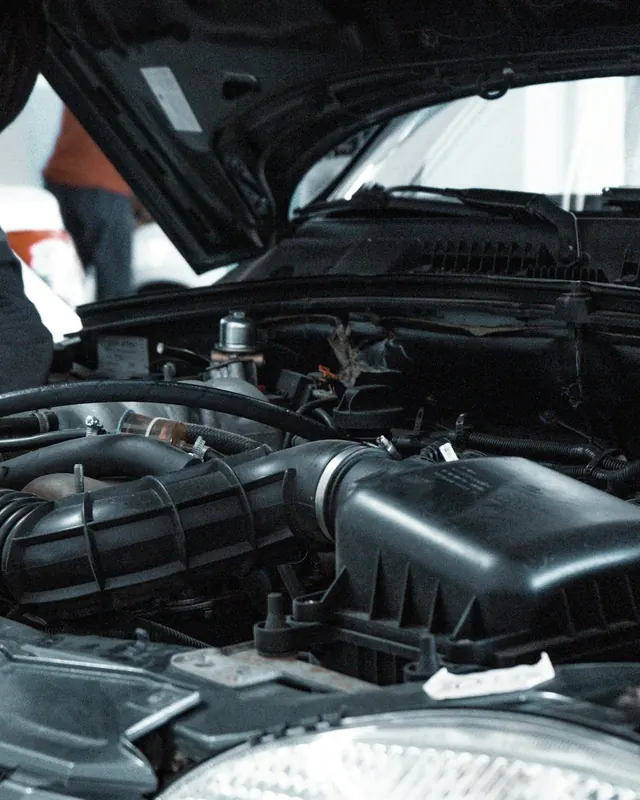
Photo: Kate Ibragimova on Unsplash
On this page
- The short answer
- Does a shop have to give you a written estimate in California?
- What should a car repair estimate include?
- What about diagnosis and teardown estimates?
- Can the shop charge more than the estimate without asking?
- What should be on the final invoice?
- Can you get your old parts back?
- When to bring it in
- Common questions
The short answer
In California, the California Bureau of Automotive Repair (BAR) says a shop must give you a written estimate before doing any work. It should show the total estimated price for parts and labor, list the parts and the method of repair, and the shop needs your permission before doing more work or going over that amount. Read it, ask questions, and never sign a blank work order.
You've dropped the car off, the shop calls back with what they found, and now there's a sheet of paper (or an email) with parts, labor and a total. Is that everything it should say? What happens if they find something else halfway through? Here's what California's Bureau of Automotive Repair (BAR) says an estimate and invoice should include, and the questions worth asking before you sign.
We're not giving legal advice here. We're pointing you to what BAR tells drivers in its own consumer guide, which is linked at the bottom of this post.
Does a shop have to give you a written estimate in California?
According to BAR, yes. Its guide says that by law a repair shop must give you a written estimate before doing any work. That goes for a brake job, a check engine light diagnosis or a bigger engine repair. So ask for it in writing.
BAR also says that once you have the estimate, you can take the car to another shop for a second opinion.
What should a car repair estimate include?
According to BAR, a written estimate should show:
- The total estimated price for parts and labor for the specific repair or service. Sales tax isn't part of that number.
- An itemized list of the parts the shop plans to use.
- The method of repair, meaning what they plan to do.
- Any work done at a different shop, if part of the job will be sent out.
BAR says the shop has to stick to the method of repair and the parts listed unless you agree to changes in advance. When you sign the estimate or work order, you're giving the shop permission to do that work, and you're agreeing to pay up to the amount on it.
One rule from the guide is worth repeating word for word: "Do not sign a blank work order."
What about diagnosis and teardown estimates?
Some problems need testing before anyone can say what's wrong. BAR notes that newer cars often need a diagnosis before repairs can be done, and the estimate may cover the diagnosis alone or the diagnosis and the repair together. It also suggests asking whether there's a charge for the estimate.
A teardown is different. For some complex problems, like a transmission failure, the shop may have to take part of the car apart just to give you an accurate estimate. BAR says a teardown estimate should tell you:
- That the vehicle may not be able to be put back together.
- What it will cost to reassemble it, including gaskets, seals and other parts that get destroyed in the teardown.
- How long reassembly will take.
There can be a charge for a teardown even if you don't have the repair done. After the teardown, the shop writes a revised estimate with the parts and labor for the recommended repair. If you decide not to go ahead, BAR says the shop must put the car back together within the cost and time stated on the teardown estimate.
Repairer Driven News reported on January 8, 2026 that BAR updated its "Write It Right" guide for shops, including guidance that teardown estimates must describe the general area or component to be taken apart.
Can the shop charge more than the estimate without asking?
Not according to BAR. Its guide says that if the technician finds the car needs more work and it will cost more than the original estimate, someone from the shop must contact you, describe the additional work and cost, and get your permission before going on.
You don't have to approve it over the phone. If you do, BAR says the shop must note on the invoice the name and phone number of the person who approved it and the date and time. After the repair, you may be asked to sign or initial a line on the final invoice acknowledging that you approved the increase over the phone. The shop can use email or fax approval instead, with a copy attached to the final invoice. You can also name someone else to approve extra work for you, and their approval has to be noted on the estimate and invoice.
| Situation | What BAR says happens |
|---|---|
| Job goes as planned | Shop sticks to the parts and method on the signed estimate |
| More work is needed and it will cost more | Shop contacts you, explains the work and cost, and waits for your OK |
| You approve by phone | Name, phone number, date and time go on the invoice |
| You approve by email or fax | A copy is attached to the final invoice |
What should be on the final invoice?
When the job is done, BAR says the invoice should include:
- The shop's name, address and its auto repair dealer (ARD) registration number.
- All work performed, including any work done under warranty at no charge.
- An itemized list of every part replaced, marking any that are used, reconditioned or rebuilt.
- The labor cost.
- Any hazardous waste charge, with the EPA number.
Compare the invoice to the estimate you signed. The parts and work should match, plus anything you approved along the way.
Can you get your old parts back?
Yes, but you have to ask before the work is done. BAR says the shop is required to return replaced parts only if you ask for them in time, and BAR says you can ask when you sign the estimate or work order.
There are two common exceptions. A rebuilt part often comes with a "core" charge, because the old part goes back to the supplier. BAR says you may have to pay that core charge to keep it. And if a part goes back to the supplier under warranty, you won't get it back, but you have the right to see it.
When to bring it in
If you ever have a problem with a repair at any shop, BAR says to talk to the service manager first. If that doesn't settle it, you can file a complaint at bar.ca.gov or call BAR at (800) 952-5210. Keep your estimate, invoice and receipts.
If something's wrong with the car, the estimate is where the conversation starts. At Johnson's we give you a written estimate before any work. Our repairs carry a 1-year/12,000-mile warranty.
Not sure what's wrong yet? Start with a diagnostic check, or look over the services we offer. If it's a warning light, see our post on what to do when the check engine light comes on. You can call us at (951) 445-8055 or book a visit online. We're open Monday to Friday, 9 to 5.
Common questions
Does a mechanic have to give a written estimate in California?
According to BAR, yes. Its consumer guide says that by law the shop must provide a written estimate before doing any work. The estimate shows the total estimated price for parts and labor for the specific repair, and your signature on it gives the shop permission to go ahead up to that amount.
Can a shop charge more than the estimate?
Not without your OK. BAR says that if the job needs more work and will cost more than the original estimate, someone from the shop must contact you, describe the extra work and cost, and get your permission first. If you approve by phone, the shop writes down who approved it, the phone number, and the date and time.
Can I get my old parts back after a repair?
Yes, if you ask before the work is done. BAR says you can ask when you sign the estimate or work order. If the shop installs a rebuilt part, the old part usually goes back to the supplier as a core, and BAR says you may have to pay the core charge to keep it. If a part goes back to the supplier under warranty, you can't keep it, but you have the right to see it.
Is there a charge for a car repair estimate?
It depends on the shop and the job, so ask before you leave the car. BAR notes that newer cars often need a diagnosis before repairs can be done, and the estimate may cover the diagnosis alone or the diagnosis and the repair. A teardown, where the shop has to take something apart to find the problem, can have a charge even if you don't go ahead with the repair.
What should I do if I have a problem with a repair?
Start by talking to the service manager. If you still can't work it out, BAR says you can file a complaint on its website, bar.ca.gov, or call (800) 952-5210 for a form. Keep your estimate, invoice and receipts.
Sources
More from the blog
Car Heater Blowing Cold Air? The Usual Causes and What to Check
Heat set to hot but the vents blow cold? The usual causes, from low coolant to a stuck blend door, what you can check yourself and when it means a bigger problem.
Synthetic vs Conventional Oil: Which One Does Your Car Need?
Synthetic or conventional oil? What your owner's manual requires, what 0W-20 means, when synthetic is worth it, high-mileage oil and whether you can switch.
Why Does My Car Shake When I Brake? Rotors, Pads and Other Causes
Steering wheel shakes or the brake pedal pulses when you stop? What usually causes it, why "warped rotors" isn't the whole story, and when it's not safe to drive.