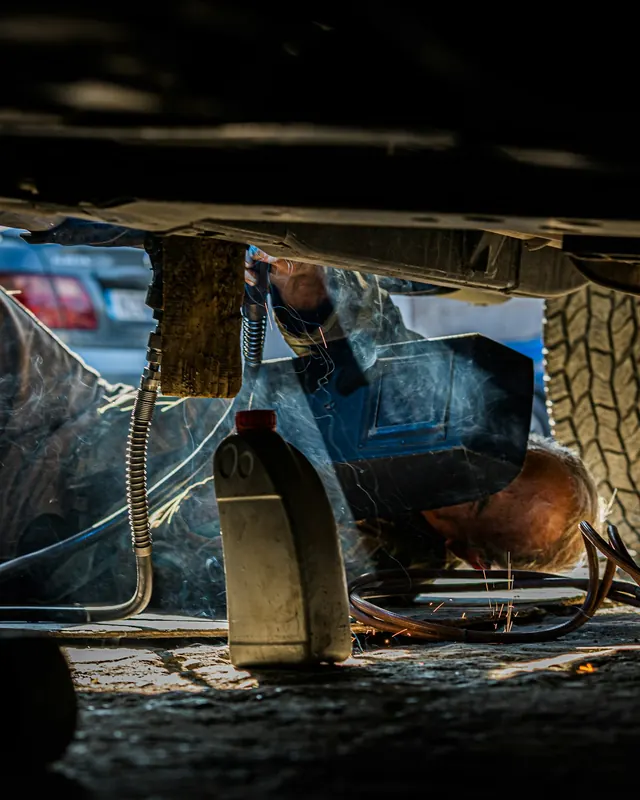
Does Going to an Independent Mechanic Void Your Car's Warranty?
Photo: Mike Lorusso on Unsplash
On this page
- The short answer
- Does going to an independent mechanic void your warranty?
- Do you have to follow the dealer's maintenance schedule?
- Can aftermarket parts void your warranty?
- What records should you keep?
- Which work still goes to the dealer?
- What if a dealer says your warranty is void?
- When to bring it in
- Common questions
The short answer
In a 2022 warranty alert, the Federal Trade Commission says "the choice is yours" when it comes to who services a product under warranty, and that companies that void a warranty because you used an independent shop or did the work yourself may be breaking the law. Follow the maintenance schedule in your owner's manual, keep dated receipts that list the parts and work, and take recalls and covered warranty repairs to the brand's dealer.
Your car is still under warranty, the oil change light just came on, and the dealer is a drive away. Can you take it to the shop down the street, or will that cost you your warranty? Here's what the Federal Trade Commission (FTC) and NHTSA say, what records to keep, and which jobs still belong at the dealer.
We're not giving legal advice here. We're pointing you to what the FTC, NHTSA and the Auto Care Association say, and their pages are linked at the bottom of this post.
Does going to an independent mechanic void your warranty?
Not just for using an independent shop, according to the FTC. In a July 2022 consumer alert, the FTC wrote that "the choice is yours" when it comes to who services your product, and that "companies that void your warranty for choosing an independent shop or to fix it yourself may be breaking the law."
The alert's examples were motorcycles, generators and grills, but its points are about warranties in general, not one product. The federal law behind it is the Magnuson-Moss Warranty Act, passed in 1975. The FTC's alert described its lawsuits alleging that several companies violated that act with their warranty restrictions.
Your warranty booklet spells out the maintenance it expects. That part is on you, wherever you have the work done.
Do you have to follow the dealer's maintenance schedule?
The maintenance in your owner's manual has to be done, but the Auto Care Association, an aftermarket industry trade group, says "you can get that maintenance done at any qualified independent repair shop, not just the dealer." It also says: "You're never required to use the dealership for non-warranty work."
A few things worth knowing about the schedule:
- It's in the owner's manual or the maintenance booklet, not on a dealer's service menu.
- Many manuals have two schedules, normal and severe. Short trips, stop-and-go traffic, dusty roads and extreme heat often count as severe. Lake Elsinore summers and the I-15 crawl can fit that description, so check what your manual says.
- Oil type matters. The manual lists the oil viscosity and the specification it needs. Our post on synthetic vs conventional oil explains how to read it.
- Fluids and filters count too. Brake fluid, coolant, air filters and spark plugs all have intervals. See how often to change brake fluid and what a tune-up includes on a modern car.
Can aftermarket parts void your warranty?
Not just for being aftermarket, according to the FTC. Its alert says companies "can't void your warranty or deny warranty coverage solely because you use a part made by another company."
There are two limits the FTC spells out:
- Damage caused by the part or the work. The FTC says companies may refuse warranty coverage for defects or damage caused by third-party parts or third-party services. If a wrong part or a bad repair breaks something, that repair may not be covered.
- Parts the warranty provides at no charge. The FTC says the rule above doesn't apply when the company provides the part or service at no charge under the warranty.
The Auto Care Association says the manufacturer or dealer "has the responsibility to demonstrate" that the non-original part or service caused the failure in question. And the FTC says a company can't refuse to make a covered repair simply because you took the car to an independent shop before.
Here's how the alert's general points line up with common car situations.
| Situation | What the FTC's 2022 alert says |
|---|---|
| You had the oil changed at an independent shop | The choice of shop is yours |
| A part made by another company is on the car | Not by itself a reason to void the warranty or deny coverage |
| That part or repair caused the failure | The company may refuse coverage for that damage |
| You took the car to an independent shop before | Not a reason to refuse a covered repair |
What records should you keep?
Keep every invoice, in one place. The Auto Care Association recommends that you "keep dated records and receipts for every service, with an accurate description of the parts used and work performed."
A good service record shows:
- The date and the mileage.
- What was done (oil and filter change, brake fluid flush, tire rotation).
- The parts and fluids used, including the oil viscosity and specification.
- The shop's name and address.
If you do your own oil changes, keep the receipts for the oil and filter and write down the date and mileage. A folder in the glovebox works. So does a photo of each receipt in an album on your phone.
Which work still goes to the dealer?
Recalls and repairs covered by the warranty go to the brand's dealer. An independent shop can do your maintenance, but when a covered part fails, the warranty claim runs through the manufacturer's dealer network.
For recalls, NHTSA says the manufacturer is required to fix the problem at no charge to the owner. Its October 2025 consumer alert tells owners with an open recall to call the automaker's local dealer to schedule the repair.
NHTSA recommends checking for open recalls at least twice a year. Go to NHTSA.gov/recalls and enter your 17-character VIN, which is on the lower left of the windshield or on the label inside the driver's door jamb.
If you bought an extended warranty or a service contract, read its terms. Those are separate contracts with their own rules on where work can be done and how claims get approved.
What if a dealer says your warranty is void?
Ask for the reason in writing, and bring your service records showing the maintenance was done on schedule.
If you still think the denial is wrong, the FTC asks people to report it at ReportFraud.ftc.gov. You can also contact the manufacturer's customer service line, which is usually listed in the owner's manual or warranty booklet.
When to bring it in
If your car is due for scheduled maintenance, bring the owner's manual or tell us the mileage so the work matches the schedule your car's maker calls for. We give you a written estimate before any work. Ask for an invoice that lists the parts and fluids so your records stay complete. Our repairs carry a 1-year/12,000-mile warranty.
See our oil change service or everything we work on. You can call us at (951) 445-8055 or book a visit online. We're open Monday to Friday, 9 to 5.
Common questions
Will an oil change at an independent shop void my new car warranty?
In a 2022 alert about product warranties, the FTC says "the choice is yours" when it comes to who does the service, and that companies that void a warranty because you chose an independent shop or did the work yourself may be breaking the law. Keep up with the maintenance in your owner's manual and keep the receipts.
Can a manufacturer deny a warranty claim because of aftermarket parts?
According to the FTC, a company can't void your warranty or deny coverage solely because you used a part made by another company. It may refuse coverage for defects or damage that the third-party part or service caused. The FTC says that rule doesn't apply when the company provides the part or service at no charge under the warranty.
Do I have to take my car to the dealer for recalls?
Yes, recall repairs go through the automaker's dealers. NHTSA says the manufacturer is required to fix the problem at no charge to the owner, and its October 2025 consumer alert says to call your automaker's local dealer to schedule the recall repair. You can check your VIN at NHTSA.gov/recalls.
What records should I keep if I don't use the dealer?
Keep every invoice. The Auto Care Association, an aftermarket industry trade group, recommends dated records and receipts for every service with an accurate description of the parts used and the work performed. Note the date and mileage, and keep receipts for parts and fluids if you do the work yourself.
What should I do if a dealer says my warranty is void because of an independent shop?
Ask for the reason in writing and bring your service records. The FTC says a company can't refuse a covered repair simply because you previously took the car to an independent shop, and it asks people to report problems at ReportFraud.ftc.gov.
Sources
- Federal Trade Commission, FTC says companies' warranty restrictions were illegal (July 7, 2022)
- Auto Care Association, Magnuson Moss Warranty Act
- NHTSA, Consumer Alert, Change Your Clocks, Check for Safety Recalls (October 30, 2025)
- NHTSA, Vehicle Safety Recalls Week, Check for Recalls
- NHTSA, Motor Vehicle Safety Defects and Recalls, What Every Vehicle Owner Should Know (revised November 2024)
More from the blog
What Should a Car Repair Estimate Include? Your Rights in California
What a written car repair estimate in California has to show, how extra work gets approved, what goes on the invoice and how to ask for your old parts back.
Car Heater Blowing Cold Air? The Usual Causes and What to Check
Heat set to hot but the vents blow cold? The usual causes, from low coolant to a stuck blend door, what you can check yourself and when it means a bigger problem.
Synthetic vs Conventional Oil: Which One Does Your Car Need?
Synthetic or conventional oil? What your owner's manual requires, what 0W-20 means, when synthetic is worth it, high-mileage oil and whether you can switch.