Do I Need a Transmission Fluid Change? What "Lifetime" Fluid Means
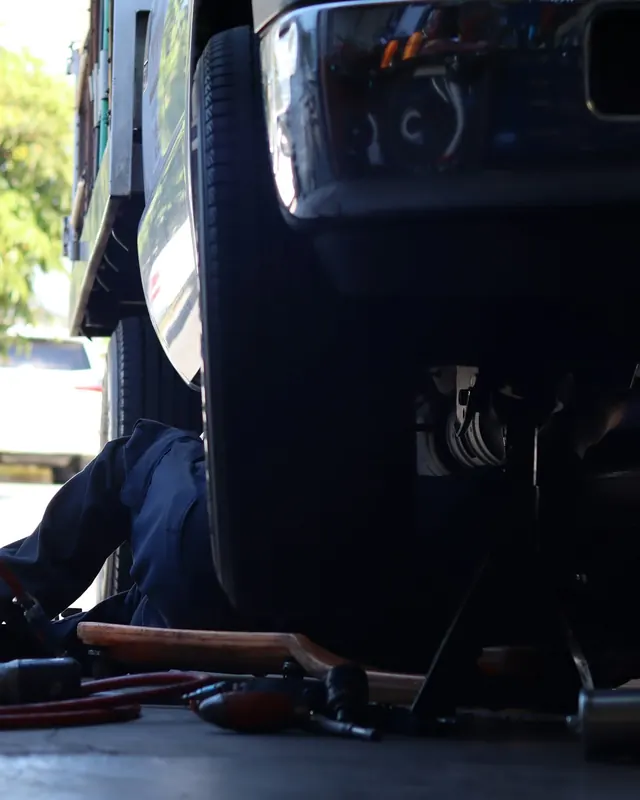
Photo: Danny Pineda on Unsplash
On this page
- The short answer
- Does "lifetime" transmission fluid really last the life of the car?
- How often should transmission fluid be changed?
- What counts as severe service for a transmission?
- Drain and fill or flush: what's the difference?
- How can I tell if my transmission fluid needs changing?
- Should I change the fluid on a high-mileage car that's never had it done?
- When to bring it in
- Recent work like this
- Common questions
The short answer
Most automatic transmissions do need a fluid change eventually, even when the manual calls the fluid "lifetime." AAA lists 60,000 to 100,000 miles as the usual range for automatics and CVTs, and sooner for towing, hot climates, mountain driving and stop-and-go traffic. Your owner's manual has the exact interval and fluid type, and healthy fluid is red or pink, not brown, black or burnt-smelling.
Your owner's manual says the transmission fluid is "lifetime," the car has 90,000 miles on it, and you're wondering whether it ever needs changing. It's a fair question, and the answer isn't the same for every car. Here's what "lifetime" means, how often the fluid usually needs changing, what changes the schedule, and how to tell if yours is overdue.
Does "lifetime" transmission fluid really last the life of the car?
"Lifetime" transmission fluid usually means a long interval, not forever. AAA describes these fluids as ones that don't need changing until the vehicle has traveled 100,000 miles or more. That's a big improvement over older cars, and plenty of cars on the road today are well past 100,000 miles.
Cars.com puts it plainly: there's some question whether never changing the fluid shortens that "lifetime," and it suggests checking and likely changing the fluid around 100,000 miles even on cars with lifetime fluid.
Automatic transmission fluid does several jobs at once. It lubricates the gears and clutches, carries heat away, and supplies the hydraulic pressure an automatic uses to shift. As it wears out, it does all three a little worse.
Next step: open your owner's manual or maintenance booklet and find the transmission line. AAA calls the manual the definitive source for your car's fluid requirements, and many manuals list a separate, shorter interval for severe service.
How often should transmission fluid be changed?
For most cars, AAA gives these general ranges:
| Transmission type | Typical fluid change interval (AAA) |
|---|---|
| Automatic | Every 60,000 to 100,000 miles |
| CVT (continuously variable) | Every 60,000 to 100,000 miles |
| Manual | Every 30,000 to 60,000 miles |
| Dual-clutch (DCT) | Often sold as "lifetime," but experts often recommend 30,000 to 60,000 miles |
Those are ranges, not your car's number. If the manual and a general chart disagree, go with the manual, and use the shorter end of its range if you drive the way the next section describes.
What counts as severe service for a transmission?
Severe service is driving that makes extra heat or extra load, and heat is what wears transmission fluid out. Cars.com calls heat the biggest killer of your transmission, partly because it breaks down the fluid, and names stop-and-go driving, hauling heavy loads and towing as common sources of it.
AAA lists these as reasons to change the fluid more often:
- Frequent towing or carrying heavy loads
- Living in hot or mountainous regions
- Regular stop-and-go city driving
Around here, that describes a lot of normal driving. Summer afternoons over 100°F, crawling on the I-15 at rush hour, climbing the Ortega Highway (SR-74) grades, and pulling a boat or trailer to the lake all put the transmission on the hard side of the schedule. A car that does all of that isn't on the same plan as one that cruises the highway in mild weather.
Drain and fill or flush: what's the difference?
A drain and fill replaces part of the transmission fluid, and a flush is meant to replace most of it. Cars.com says a standard change may replace only a third to a half of the fluid, because a lot of it stays in the torque converter and internal passages. A flush pushes new fluid through to replace most of the old fluid.
Neither one is automatically better. A partial change done on schedule keeps the fluid fresher over time, and some manufacturers specify one method for their transmissions. Cars.com also mentions a theory that flushing can dislodge debris trapped in internal passages, which is one reason the fluid's condition matters before deciding.
What matters most:
- The right fluid. AAA warns that transmissions aren't one-size-fits-all, and the wrong fluid can permanently damage one. Many cars, CVTs especially, need a specific fluid.
- The right level. AAA notes that too much or too little fluid can cause overheating or shifting problems.
- The right procedure. Many newer transmissions are checked and filled at a set temperature through a fill plug, not a dipstick.
How can I tell if my transmission fluid needs changing?
Transmission fluid that needs changing usually looks dark and smells burnt. AAA says healthy fluid is bright red or pink, and fluid that's brown, black or smells burnt is likely due. Cars.com adds that metal shavings in the fluid are a bad sign, and foamy fluid can mean the level is too high.
If your car has a transmission dipstick, Cars.com describes the usual check: park on level ground with the engine warmed up and running, hold the brake and shift slowly through all the gears, then put it in Park and check the level. Some cars check differently, so follow your owner's manual.
Other signs worth paying attention to:
- Pink, red or dark puddles under the car, which point to a leak
- A burnt smell from under the hood after a drive
- Shifts that feel late, harsh or like they're slipping
If the shifting has changed, start with our post on signs your transmission is slipping. New fluid can help a transmission that's healthy, but it can't repair worn clutches.
Should I change the fluid on a high-mileage car that's never had it done?
Have the fluid checked first. If it's still red and clean, following the manual's schedule from here is usually reasonable. If it's dark, burnt-smelling or has debris in it, that tells you more about the transmission's condition and helps decide what service makes sense, or whether there's a problem a fluid change won't fix.
What doesn't help is guessing. The fluid's color and smell, any stored codes and a short road test give a much clearer picture than mileage alone. If you're planning a long drive soon, add it to the list in our road trip car checklist.
When to bring it in
Bring the car in if you're near or past the interval in your manual and don't know when the fluid was last changed, if the fluid looks or smells wrong, if you see a red or pink leak, or if the shifting feels different. Also bring it in if there's no dipstick and you'd like to know where things stand.
Here's what we'd do at our shop in Lake Elsinore:
- Ask how you drive (towing, commute, mountain trips) and look up what your manufacturer specifies.
- Check the fluid level and condition, and look for leaks.
- Scan for stored transmission codes and road test the car if anything feels off.
- Give you a written estimate before any work, and tell you plainly whether it needs service now or can wait.
Our ASE-certified technicians do transmission fluid services and repairs, and repairs are backed by our 1-year/12,000-mile warranty. See our transmission repair page or call (951) 445-8055, Monday to Friday, 9 to 5.
Recent work like this at our shop
A few recent jobs from our service records. Vehicle, mileage and month only; no customer details.
| Vehicle | Work | Mileage | When |
|---|---|---|---|
| 2021 Dodge Challenger | Transmission service | 36,416 mi | May 2026 |
| 2006 Toyota Tundra | Transmission service | 130,989 mi | Feb 2026 |
| 2020 Chevrolet Silverado 1500 | Transmission service | 100,000 mi | Nov 2025 |
| 2016 Chrysler 200 | Transmission service | 47,490 mi | Jan 2025 |
| 2009 Toyota Camry | Transmission service | 101,865 mi | Sep 2024 |
Common questions
Does lifetime transmission fluid ever need to be changed?
Usually, yes. AAA describes "lifetime" fluid as fluid that doesn't need changing until about 100,000 miles or more, not fluid that lasts as long as the car. Cars.com suggests checking and likely changing it around 100,000 miles even on cars with lifetime fluid. If you tow, live somewhere hot or sit in traffic a lot, look for the severe service schedule in your owner's manual.
How often should automatic transmission fluid be changed?
AAA gives a general range of every 60,000 to 100,000 miles for automatic transmissions and CVTs, and 30,000 to 60,000 miles for manual transmissions. Your owner's manual is the final word for your car, and towing, heat and stop-and-go driving all call for the shorter end.
Is a transmission flush better than a drain and fill?
They do different things. A drain and fill replaces only part of the fluid, about a third to a half according to Cars.com, because the rest stays in the torque converter and internal passages. A flush is meant to replace most of the old fluid. Which one is right depends on what the manufacturer specifies for your transmission and on the fluid's condition.
What color should transmission fluid be?
Healthy automatic transmission fluid is usually bright red or pink. AAA says fluid that's brown or black, or smells burnt, likely needs changing. Cars.com says metal shavings in the fluid are a bad sign, and foamy fluid can mean the level is too high. Either one is a reason to have it checked before adding fluid.
Can I check transmission fluid myself?
If your car has a transmission dipstick, yes. Many newer cars don't have one, and AAA notes that many modern vehicles have sealed transmissions, and checking or changing the fluid on those can take tools, like a lift, that most drivers don't have. If there's no dipstick, have a shop check the level and condition.
Sources
More from the blog
Is My Transmission Slipping? Signs, Causes and What to Do
Engine revs but the car doesn't speed up? How a slipping transmission feels, what to check yourself, what causes it and when to stop driving it.

Road Trip Car Checklist: What to Check Before a Holiday Drive
Driving out of town for Thanksgiving? What to check on your car yourself, what to have a shop look at, and what to pack before the I-15 or a mountain drive.
Clicking Noise When Turning? Signs of a Bad CV Axle or Torn Boot
A clicking or popping sound on tight turns usually points to a worn CV joint. What it means, how to spot a torn CV boot and how soon to have it checked.