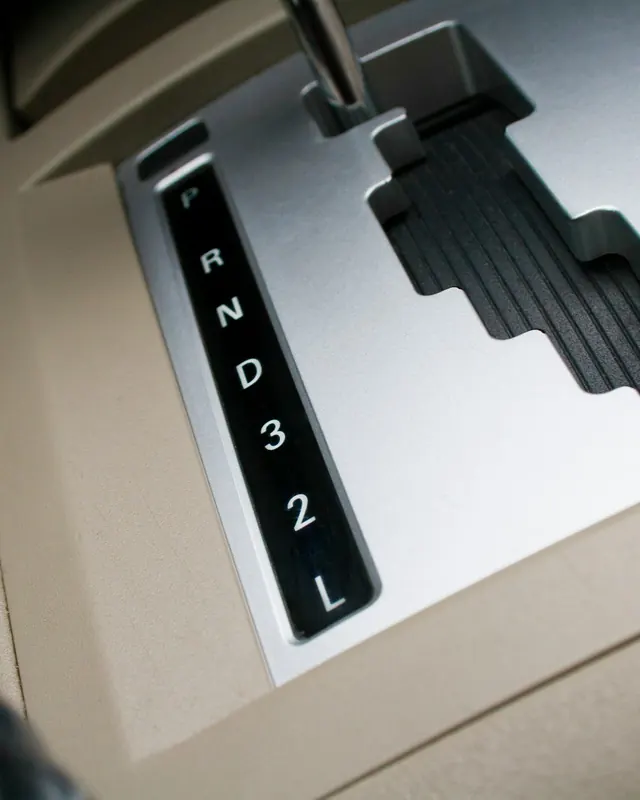
Is My Transmission Slipping? Signs, Causes and What to Do
Photo: Shadow Photography on Unsplash
On this page
- The short answer
- What does a slipping transmission feel like?
- Is it normal for my engine to rev without speeding up?
- What causes a transmission to slip?
- Can I check the transmission fluid myself?
- Is it safe to drive with a slipping transmission?
- How do I keep my transmission from slipping?
- When to bring it in
- Recent work like this
- Common questions
The short answer
A slipping transmission feels like the engine revs higher than it should while the car barely speeds up, or like the car briefly loses power between gears. AAA lists low or contaminated fluid, worn clutches or bands, and torque converter problems as the usual causes. Check the fluid if your car has a dipstick, take it easy, and have it diagnosed soon, because slipping tends to get worse and creates more heat inside the transmission.
You press the gas, the engine revs, and the car takes a second to catch up. Or a shift between gears feels loose, like the car let go for a moment. That's what people mean by a slipping transmission. Here's how to tell if that's what you're feeling, what you can check in the driveway, what usually causes it, and how soon it needs attention.
What does a slipping transmission feel like?
The most common sign is the engine revving higher than it should for how fast you're going. AAA describes it as the engine revving higher than it should for your speed, or the car briefly losing power and "slipping" out of gear.
Other signs AAA lists:
- A delay when you press the gas, especially pulling away from a stop.
- A surge or lurch during a shift.
- Trouble holding speed uphill. Around here that's the Railroad Canyon grade or the climb up Ortega Highway (SR-74).
- Whining or grinding noises.
- A burning smell from the transmission.
Some drivers also notice a shift that lands with a thump. Consumer Reports adds that a failing automatic can shift more abruptly and at odd times. You may also see a check engine light, since many cars store a code when the transmission's computer sees gears slipping.
Is it normal for my engine to rev without speeding up?
A quick jump in revs when you floor it and the transmission downshifts is normal. Revs that keep climbing while the car doesn't speed up to match are not. In a car with a CVT (continuously variable transmission) and in some hybrids, AAA Club Alliance points out the engine may rev without the car speeding up right away, and that's how those transmissions work. What's not normal is revving that keeps getting worse or performance that starts to drop off compared to how the car used to drive.
If you're not sure what kind of transmission you have, the owner's manual will say, and the dipstick handle or fill cap often names the fluid it takes.
What causes a transmission to slip?
AAA lists four main causes. Here's how each one tends to show up:
| Cause | What you might notice |
|---|---|
| Low or worn-out fluid | Slipping that comes and goes, worse when hot, sometimes a leak |
| Worn clutches or bands inside | Slipping in one or two gears, getting steadily worse |
| Torque converter problem | Shudder or slip at a steady cruising speed |
| Other internal mechanical problems | Noises, harsh shifts, warning light |
Low fluid is the one to rule out first, because it's the easiest to check and it causes damage if it's ignored. AAA says worn seals and damaged pan gaskets are what usually cause transmission leaks, and that low fluid from a leak can lead to slipping, overheating and eventual failure.
Heat is the other big factor. Transmission fluid lubricates and cools, and AAA notes that overheated fluid can give off a burnt smell. Towing, stop-and-go traffic on I-15 and hot inland afternoons all put more heat into it.
Can I check the transmission fluid myself?
On many cars, yes. On many newer ones, no. Consumer Reports says some cars have a dipstick or reservoir you can check under the hood, while others are basically sealed or need a dealer's service computer to read the fluid temperature.
If your car has a transmission dipstick, follow the owner's manual exactly. Many automatics are checked with the engine warm and running, in Park, on level ground, but the steps vary by car and the wrong method gives a wrong reading.
What to look for:
- Level between the marks on the dipstick.
- Color. AAA says healthy fluid is usually bright red or pink (AAA Club Alliance notes some fluids are dyed other colors). Brown or black fluid is likely due for a change.
- Smell. A burnt smell means the fluid has been overheating.
- Drips under the middle of the car. AAA says a leak near the middle could be transmission fluid or oil, and Consumer Reports says a red puddle is a sign of a transmission leak.
Only add the exact fluid type the manual or the cap calls for. Consumer Reports warns that CVTs in particular need CVT-specific fluid.
Is it safe to drive with a slipping transmission?
Short, gentle trips to get it looked at are usually fine. Daily driving on it isn't. A slipping transmission can fail to pull when you need it most, like merging onto the freeway, and every slip creates heat and wear inside, so it rarely gets better on its own.
Stop driving and have it towed if:
- It won't go into gear, or won't move in Drive or Reverse.
- You smell burning along with slipping or a warning light.
- There's fluid pouring out, not just a drip.
If the car goes into a protective mode (often called limp mode) that holds it in one gear and turns on a warning light, drive it only as far as you need to, at low speed, and have it towed if you're on the freeway.
Until it's checked, go easy: gentle starts, no towing, and avoid long climbs in the heat if you can.
How do I keep my transmission from slipping?
Change the fluid on the schedule in your owner's manual, and use the severe-service schedule, if your manual lists one, when you tow, drive in heavy traffic or deal with a lot of heat. Intervals vary a lot. Consumer Reports says they range from as little as 30,000 miles to more than 100,000, and some cars are sold with fluid meant to last the life of the car.
Fix leaks while they're small, and pay attention to how the car shifts. Changes usually show up gradually, so a slight delay or a new shudder is worth mentioning at your next visit. Asking us to look at the fluid during an oil change is an easy habit. Our oil change guide explains how to tell whether the normal or severe schedule in your manual applies to you.
When to bring it in
Bring it in as soon as you notice slipping, delayed shifts, a burning smell or a transmission leak. Caught early, it's more often a leak or a fluid service than internal work.
Here's how we check it, in order:
- Talk through what you're feeling: which gears, cold or warm, uphill or at steady speed.
- Check the fluid level and condition, and look for leaks at the pan, seals and cooler lines.
- Read stored codes and live data. If the check engine light is on, see what a check engine light means.
- Road test to confirm when and how it slips.
- Recommend the next step, whether that's fixing a leak, a fluid service or a closer look inside. We don't recommend internal work until these checks point to it.
You get a written estimate before we do any work, and repairs come with our 1-year/12,000-mile warranty. See our transmission repair and diagnostic pages, or call (951) 445-8055.
Recent work like this at our shop
A few recent jobs from our service records. Vehicle, mileage and month only; no customer details.
| Vehicle | Work | Mileage | When |
|---|---|---|---|
| 2021 Dodge Challenger | Transmission service | 36,416 mi | May 2026 |
| 2006 Toyota Tundra | Transmission service | 130,989 mi | Feb 2026 |
| 2020 Chevrolet Silverado 1500 | Transmission service | 100,000 mi | Nov 2025 |
| 2016 Chrysler 200 | Transmission service | 47,490 mi | Jan 2025 |
| 2016 Ford Focus | Shifter repair | 179,310 mi | Nov 2024 |
Common questions
What does a slipping transmission feel like?
Usually the engine revs up but the car doesn't speed up to match, like it's in neutral for a moment. AAA also lists a delay when you press the gas, a surge or lurch during a shift, and trouble holding speed uphill. Some drivers notice it first as a gear change that takes too long or a shift that lands with a thump.
Can low transmission fluid cause slipping?
Yes. AAA says low fluid from a leak can cause slipping, overheating and eventually failure. The fluid both lubricates and cools the transmission and supplies the pressure an automatic uses to shift, so a low level can show up as slipping before anything else. Low fluid also means it's leaking somewhere, so the leak needs finding too.
Is it safe to drive with a slipping transmission?
For a short, gentle trip to a shop, often yes. For daily driving, no. A transmission that slips can fail to pull when you need it, like merging onto I-15 or crossing a busy intersection, and each slip makes heat that wears it faster. If it won't move, won't go into gear, or the warning light comes on with a burning smell, have it towed.
Will changing the transmission fluid fix slipping?
Sometimes, if the fluid was low or badly worn and nothing inside is damaged yet. If clutches or bands are already worn, new fluid won't bring them back. That's why a diagnosis comes first: the fluid's condition, any stored codes and a road test tell you whether a fluid service makes sense or whether there's more going on.
Why does my transmission slip only when it's warm?
Fluid gets thinner as it heats up, so worn seals and clutches that hold when cold can start to slip once the transmission reaches full temperature. Long climbs, towing and hot afternoons make this show up sooner. It's a sign to get it checked before it starts slipping cold too.
Sources
More from the blog
Wildfire Smoke and Your Car: Recirculate Mode and the Cabin Air Filter
How to keep wildfire smoke and Santa Ana dust out of your car, when to use recirculate, how often to change the cabin air filter, and the signs it's clogged.
Driving in the First Rain: Why the Roads Get So Slick and What to Do
Why the first rain after a dry summer makes roads so slippery, how to drive it, what to do if you hydroplane, and the tire and wiper checks worth doing first.
Why Is My Car's A/C Blowing Warm Air?
Car A/C blowing warm air? Common causes, from a refrigerant leak to a compressor that won't engage, what you can check yourself and why a recharge is not the fix.