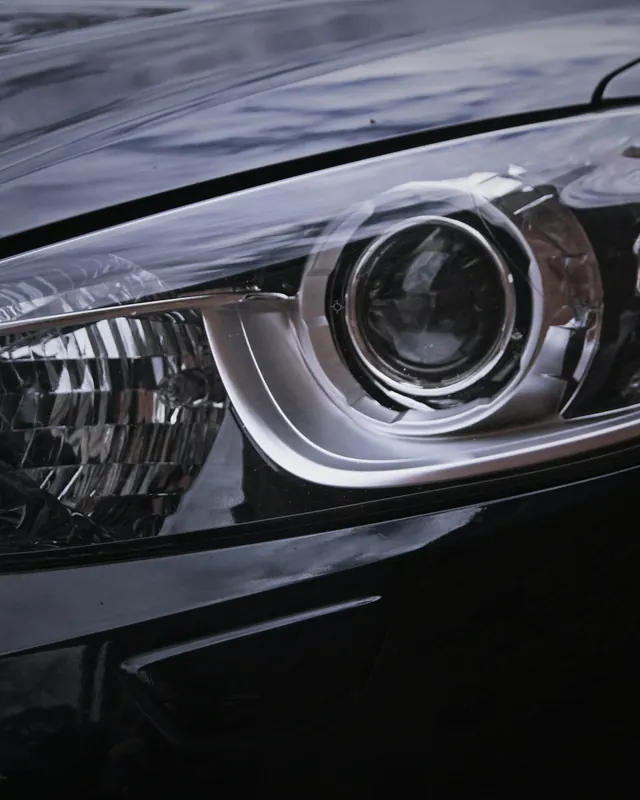
Why Are My Headlights Foggy, and How Do You Fix Them?
Photo: Tristan Beischel, Autoily on Unsplash
On this page
The short answer
Headlight lenses are plastic with a thin UV-protective coating. Years of sun break that coating down and the plastic oxidizes, turning cloudy and yellow. Restoration helps but usually lasts about a year; fogging inside the lens is a different problem, a broken seal.
Drive around Lake Elsinore at night and you'll see plenty of cars with headlights that look like they're shining through wax paper. Cloudy, yellow headlights are one of the most common things we notice on cars that come in for something else. It's more than looks: those lenses are blocking a lot of the light you need to see the road.
Why do plastic headlights turn cloudy and yellow?
Since the 1990s nearly every car has used polycarbonate plastic for the headlight lens instead of glass. It's lighter and doesn't shatter, but it breaks down in sunlight. From the factory the lens has a thin, clear UV-protective coating. Over time the sun, heat, road grit and harsh cleaners wear that coating away, and the plastic underneath oxidizes. That shows up as a dull haze, then yellowing, then a rough, almost sandy surface.
AAA says it can start in as little as three to five years. In our climate, with long summers of strong sun and cars parked outside, it often happens on the earlier end.
How much light do foggy headlights block?
A lot. AAA tested headlights from two 11-year-old sedans and found the clouded lenses produced only about 20 percent of the light of new headlights. The light that does get through also scatters, which adds glare for oncoming drivers.
That matters because, according to IIHS, about half of all traffic deaths happen in the dark or at dawn and dusk. Consumer Reports estimates a driver needs about 300 to 350 feet to see, react and stop for something in the road at 60 mph. Dim, scattered headlights eat into that distance.
Is it haze on the outside or fog on the inside?
Before fixing anything, figure out which problem you have:
| What you see | What it is | Fix |
|---|---|---|
| Dull, yellow or rough surface outside | Oxidized lens coating | Restore the lens or replace the headlight |
| Light mist inside that clears after driving | Normal venting in humid weather | Usually nothing |
| Water droplets or pooling inside | Cracked housing or failed seal | Replace the headlight assembly |
| Clear lens but weak, yellowish light | Old bulb or poor aim | New bulbs, aim check |
Run a fingertip over the lens. If it feels rough, the haze is on the outside.
Do headlight restoration kits work?
Yes, within limits. When Consumer Reports tested kits, even the weakest one improved light output, and very old lenses could be made clear again. The catch was durability: the results typically lasted about a year before the haze came back.
AAA's testing found restoration brought light output back to about 70 percent of a new headlight. Replacing the headlight assembly with an original-equipment part restored 100 percent.
A proper restoration has three steps, and skipping the last one is why so many don't last:
- Wet-sand the lens in stages, from coarse to fine grit, to remove the oxidized layer.
- Polish it back to clear.
- Seal it with a UV-resistant clear coat, because the factory coating is gone and bare plastic starts yellowing again right away.
Where that leaves you:
- Light haze: a careful restoration with a UV sealant is a reasonable fix.
- Heavy yellowing, deep pitting or crazing (fine cracks): restoration won't get you close to new. Replacement is the better answer.
- Moisture inside: replacement or resealing, since polishing doesn't fix a leak.
How do you keep headlights from yellowing?
- Park in the garage or shade when you can.
- Wash with car soap, not household cleaners or degreasers that strip the coating.
- Apply a UV protectant made for headlights a few times a year.
- Clean bugs and road film off regularly so you're not scrubbing hard later.
Check the bulbs and the aim too
Clear lenses with weak light usually mean old bulbs. Bulbs dim with age, and Consumer Reports suggests replacing them after a few years. Replace them in pairs so both sides match. Headlights aimed too low shorten how far you can see; aimed too high, they blind oncoming traffic. While you're at it, run through our headlight and wiper check.
When to bring it in
If your low beams don't reach far enough down the road, a light is flickering or out, or there's water inside a headlight, bring the car in. We'll check the bulbs, the aim and the wiring and connectors, tell you plainly whether the lenses are what's holding the light back, and give you a written estimate before any work starts.
Common questions
Do headlight restoration kits work?
They help. Consumer Reports found even the weakest kit improved light output, but the results typically lasted about a year before the haze came back. Sanding removes the oxidized layer; the result only lasts if a new UV coating goes on afterward.
Why is there condensation inside my headlight?
A little mist that clears after the lights have been on for a while can be normal, since most headlights are vented. Water droplets or a puddle inside means the seal or housing is cracked. That won't polish out, and moisture will eventually ruin the bulb and connector.
How long does headlight restoration last?
When Consumer Reports tested restoration kits, the results typically lasted about a year before the haze came back. A UV-protective clear coat after sanding, and parking in the shade, help it last longer.
Will toothpaste clean foggy headlights?
It can take off a little haze because it's a mild abrasive, but it doesn't put back the UV coating, so the yellowing returns quickly. A proper restoration with a sealing clear coat lasts much longer.
Sources
More from the blog
Getting Your Car Ready for a Southern California Winter
Winter here means rain, cold mornings and trips to the snow. What to check on your battery, tires, wipers and coolant, plus Caltrans chain rules for Big Bear.
Do You Need to Warm Up Your Car Before Driving?
Most modern cars need about 30 seconds, not five minutes. Why long idling wastes fuel, what actually protects your engine on a cold morning, and when to worry.
Days Are Getting Shorter. Check Your Headlights and Wipers Now
Daylight saving time ends Nov 1. A five-minute check of your headlights, signals and wiper blades, and the California rule on headlights in the rain.