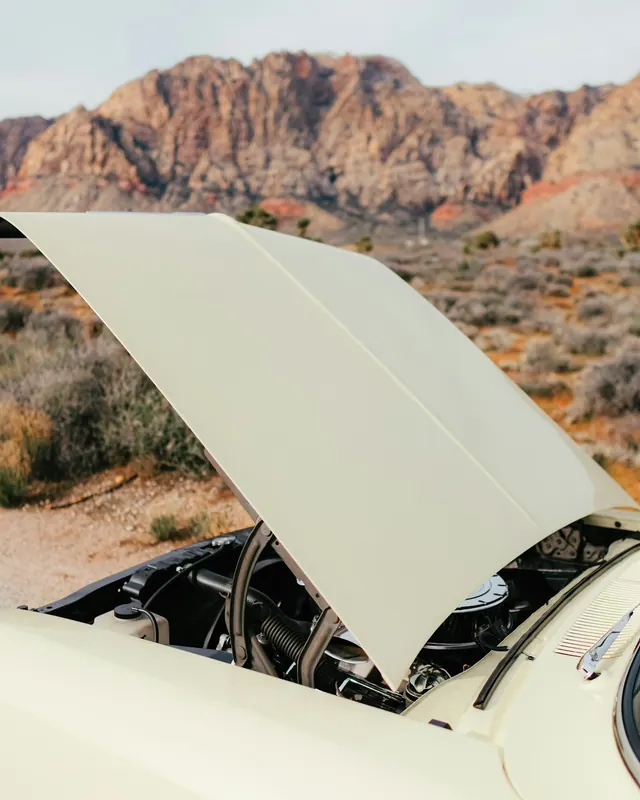
Car Overheating? What to Do Right Away (and What Not to Do)
Photo: Wesley Tingey on Unsplash
On this page
- The short answer
- What should I do first when my car is overheating?
- Why does turning on the heater help an overheating engine?
- Why should you never open a hot radiator cap?
- Can I add water or coolant and keep driving?
- What causes a car to overheat?
- How do you keep your car from overheating?
- When to bring it in
- Recent work like this
- Common questions
The short answer
If the temperature gauge climbs toward hot, turn off the A/C, turn the heater on full and get to a safe place to stop. Shut the engine off, stay back from the front of the car for at least 20 minutes, and never open a hot radiator cap. Pull over right away if you see steam or the gauge hits red, and don't keep driving an engine that keeps overheating.
The temperature needle is climbing, maybe there's steam coming from under the hood, and you're in traffic on I-15. What you do in the next few minutes matters, because an engine that keeps running hot can turn a small repair into a big one. Here's what to do, what not to do, and what usually causes it.
What should I do first when my car is overheating?
Turn off the A/C, turn the heater on full with the fan on high, and get to a safe place to stop. Once you're stopped, shut the engine off. That's the whole first minute.
Step by step:
- Turn off the A/C. It adds load to the engine and heat in front of the radiator.
- Turn the heater on full. It sounds backward, but it works (more on why below). Roll the windows down.
- Turn on your hazards and get off the road as soon as it's safe: a shoulder, an exit, a parking lot.
- Shut the engine off. AAA says to pull over and turn the engine off right away if the needle reaches the red zone.
- Get out and stay back from the front of the car if you see steam or smoke. Leave the hood closed while it's steaming. AAA says not to touch the hood or the front of the car for about 20 minutes.
AAA's warning sign is the gauge: normal is around the middle or a little below, and anything at the three-quarter mark or higher is a sign of trouble. If you see steam or hear hissing, pull over immediately rather than trying to make it home.
Why does turning on the heater help an overheating engine?
The heater is a small radiator. The heater core sits behind your dashboard, and hot coolant from the engine runs through it. With the heat on full and the fan on high, some of the engine's heat goes into the cabin instead of staying in the engine.
It won't fix anything, and it won't cool an engine that's badly overheated. It buys you time to reach a safe place to stop. AAA says the heat may help you reach a safer stopping point, and not to keep driving for long with it cranked.
Why should you never open a hot radiator cap?
Because the cooling system is under pressure, and the pressure is what keeps very hot coolant from boiling. AAA says a normal engine runs somewhere around 195 to 220 degrees Fahrenheit, and an overheated one is hotter than that. Open the cap and the pressure drops at once, the coolant turns to steam, and it can spray out and cause severe burns.
So don't touch the radiator cap or the coolant reservoir cap on a hot engine. AAA says never to remove a hot radiator cap and to wait at least 20 minutes before touching the radiator cap or the front of the car. Longer is better: the cap should only come off a cool engine, and on a 100°F afternoon in the valley that takes a while.
Can I add water or coolant and keep driving?
AAA's advice is to call roadside assistance rather than top off and drive on. Topping off isn't the fix anyway: if the coolant was low, it went somewhere, like a leaking hose, the radiator, the water pump or a gasket.
As a last resort, with the engine cold and a shop close by, adding coolant to the reservoir (or water if that's all you have) may get you that short distance. Watch the gauge the whole way. If it starts climbing again, pull over and call for a tow. Driving an engine that keeps overheating can warp the cylinder head and damage the head gasket.
What you can safely check yourself, with the engine cold:
- Coolant level in the plastic reservoir, between the marks.
- Puddles under the front of the car. Coolant is usually green, orange or pink and smells sweet.
- Hoses that look cracked, swollen or wet at the clamps.
- The drive belt (if you can see it) for cracks or missing ribs. On many cars it turns the water pump.
What causes a car to overheat?
Usually something in the cooling system has stopped doing its job. AAA lists most of these, and AAA Mountain West adds the cooling fan:
| Cause | What you might notice |
|---|---|
| Low coolant or a leak | Low reservoir, puddles, sweet smell |
| Thermostat stuck closed | Gauge climbs quickly, even on short drives |
| Radiator problem (clogged, leaking, bad cap) | Runs hot on long climbs or hot days |
| Cooling fan not working | Overheats in traffic, fine at freeway speed |
| Water pump failing | Leak or noise at the front of the engine |
| Worn or broken drive belt | Squeal, or the gauge rises along with warning lights |
| Leaking or collapsed hose | Wet hose, steam from one spot |
| Blown head gasket | White exhaust smoke, coolant keeps disappearing |
| Low engine oil | Oil light, low dipstick reading |
Heat makes all of these show up sooner. A weak fan or a partly clogged radiator might get by in spring and then quit on a 105°F day climbing the Ortega Highway (SR-74) or crawling through Railroad Canyon traffic.
How do you keep your car from overheating?
Keep the coolant level right and the coolant fresh. The Car Care Council calls cooling system failure a leading cause of breakdowns and says to check the coolant level often and change it on the schedule in your owner's manual. Many newer cars use long-life coolant with longer intervals than older cars, so the manual is the place to look.
The rest is regular checks: hoses, belts, the radiator cap and the fan. We look at these during routine service because they usually give some warning before they fail. The winter prep checklist covers coolant along with the rest of what to look at this time of year.
When to bring it in
Bring it in if the gauge has gone higher than normal even once, if you've had to add coolant, or if you see a leak under the car. If it overheated badly or overheats again after cooling, have it towed instead of driving it.
Here's what we check, in order:
- Coolant level and condition, and whether the system holds pressure (a pressure test finds leaks you can't see).
- Hoses, clamps, the radiator and radiator cap.
- The thermostat and the cooling fan, including whether the fan comes on when it should.
- The water pump and drive belt.
- Any warning lights or stored codes. If the check engine light is on too, see what a check engine light means.
You get a written estimate before we do any work, and repairs come with our 1-year/12,000-mile warranty. See our engine repair and diagnostic pages, or call (951) 445-8055.
Recent work like this at our shop
A few recent jobs from our service records. Vehicle, mileage and month only; no customer details.
| Vehicle | Work | Mileage | When |
|---|---|---|---|
| 2005 Honda Accord | Radiator, Cooling system flush | 134,388 mi | Jul 2026 |
| 2006 Toyota Tundra | Cooling system flush | 132,488 mi | Jul 2026 |
| 2020 Ram 1500 | Thermostat, Water pump | 108,493 mi | Jul 2026 |
| 2020 Cadillac XT6 | Thermostat | 47,722 mi | Jul 2026 |
| 2014 Infiniti Q50 | Radiator, Thermostat, Cooling system flush | 140,443 mi | Jun 2026 |
Common questions
Can I drive my car if it's overheating?
Only as far as a safe place to stop. Driving with the gauge in the red can warp the cylinder head and damage the head gasket, which turns a hose or thermostat repair into a much bigger one. If the engine overheats again after it cools, have it towed rather than driving it to the shop.
How long should I let an overheated engine cool down?
AAA says to wait at least 20 minutes before touching the hood or anything up front, and never to remove a hot radiator cap. Longer is better: the cap should only come off a cool engine, and on a hot day that takes a while. If the top radiator hose still feels firm and hot, the system is still under pressure.
Can I put water in my radiator instead of coolant?
AAA's advice is to call roadside assistance rather than top off and drive on. As a last resort, with a cold engine and a shop close by, water can top it off for a short trip while you watch the gauge. It isn't a fix. Plain water dilutes the coolant's protection against boiling, freezing and corrosion, so the system should be filled with the coolant your owner's manual calls for once the leak or failed part is repaired.
Why does my car overheat in traffic but not on the freeway?
At freeway speed, air is forced through the radiator. In stop-and-go traffic the engine depends on the cooling fan to pull that air through. Overheating mostly at a stop or crawl often points to a fan that isn't running, a weak fan motor or relay, or a radiator that's partly blocked.
Why does my car overheat and then the gauge goes back to normal?
A gauge that jumps up and down can mean low coolant, an air pocket in the system, or a thermostat that's sticking. Low coolant is the most common reason, and it usually means there's a leak somewhere. Check the reservoir when the engine is cold and get it looked at before it happens on a long drive.
Sources
More from the blog
How Often Should You Change Your Oil? (It's Probably Not 3,000 Miles)
The 3,000-mile rule is out of date for most cars. How to find your real oil change interval, when the severe schedule applies and why the once-a-year rule matters.
Why Do My Brakes Squeak? What Each Brake Noise Means
Squealing, grinding, clicking or scraping when you brake? What each noise usually means, which can wait and which mean stop driving, from our Lake Elsinore shop.
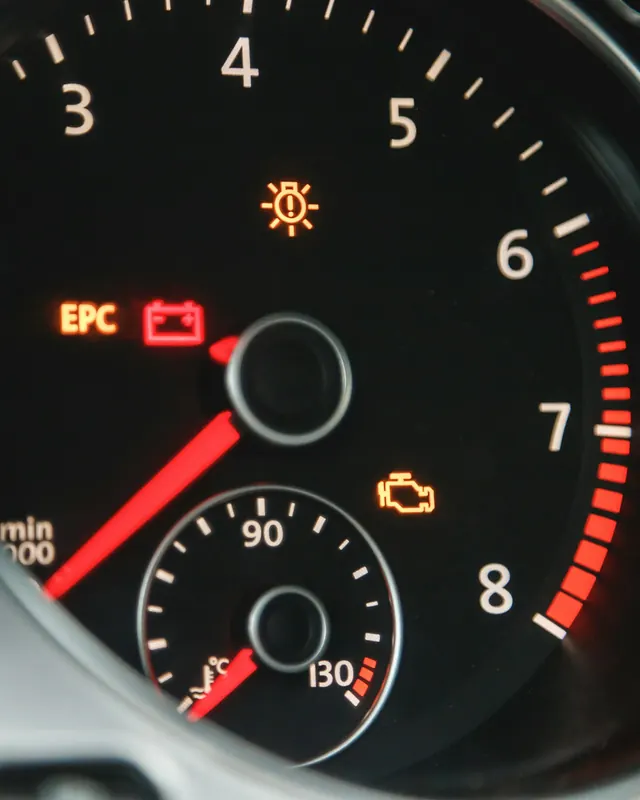
Check Engine Light On? What to Do and When to Stop Driving
Steady or flashing check engine light? What each one means, the gas cap check, what a code read does and doesn't tell you, and when to pull over.